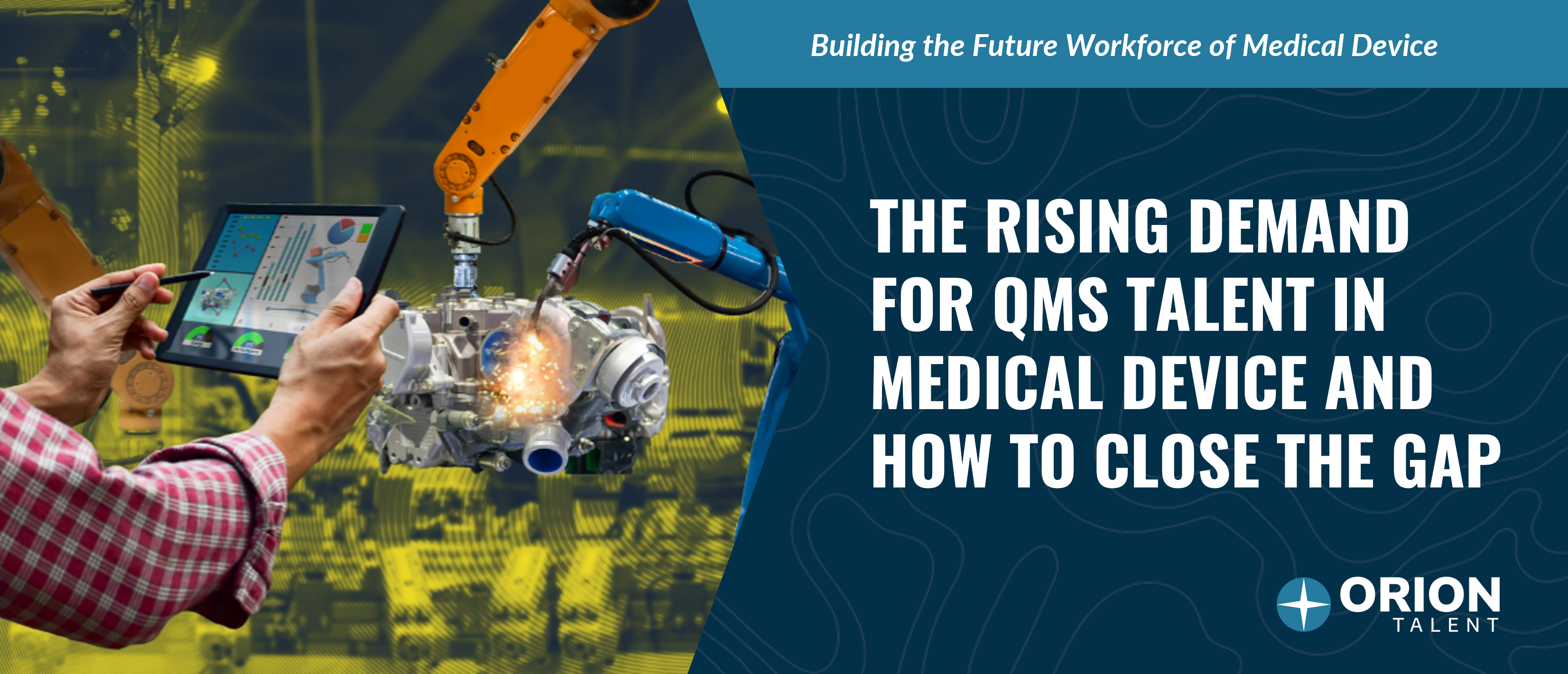
Quality Management Systems roles have become one of the most in-demand and least understood talent gaps in medical device. As regulations evolve, digital systems expand, and product complexity grows, companies need stronger quality teams than ever before. Yet many organizations struggle to find and retain the professionals who ensure compliance, patient safety, and operational excellence.
This post is part of our series, Building the Future Workforce of Medical Device, where we examine the trends, challenges, and workforce strategies shaping the future of Medical Device. We are taking a comprehensive look at the forces that influence how medical device companies attract, hire, develop, and retain their talent.
In our earlier posts, we explored the widespread talent shortages affecting the industry, how AI is reshaping required skills, why experience-only hiring limits growth, and how employment brand influences workforce stability. We also looked at how companies can build strong field service and sales teams in increasingly competitive markets. In this final post of the series, we turn our attention to a critical but often overlooked area: Quality Management Systems talent.
Why QMS Talent Is Becoming Harder to Find
QMS roles sit at the intersection of quality, regulatory, operations, and training. They ensure that processes are documented, standards are followed, audits are passed, and products remain safe and compliant. As supply chains globalize and digital quality systems become more complex, the responsibilities placed on QMS professionals have expanded.
At the same time, many companies underestimate how difficult it is to hire for these roles. They often require a blend of documentation expertise, process discipline, regulatory knowledge, and the ability to work across departments. Few candidates enter the market with all these capabilities, especially at the entry and mid-levels.
The Skills Needed for Modern QMS Work
Today’s QMS teams must be comfortable with regulated environments, documentation control, standard operating procedures, audit readiness, and digital quality systems. They need to understand how to interpret regulations, implement corrective actions, support training initiatives, and oversee compliance activities.
These roles include:
- Quality Assurance Specialist
- Quality Control Technician or Analyst
- Regulatory Affairs Associate
- Document Control Specialist
- Compliance Analyst
- Validation Engineer
- QMS Coordinator or Specialist
- ISO 9001 or ISO 13485 Compliance Specialist
- Manufacturing Quality Associate
- SOP and Training Document Specialist
These positions form the foundation of a healthy quality system, yet they are often the hardest to staff because they require both precision and cross-functional awareness.
Why Military Talent Aligns Naturally with QMS Roles
Many QMS responsibilities closely mirror the work performed in military environments. Service members operate within tightly controlled procedures, maintain detailed documentation, follow structured training programs, and adhere to strict safety and compliance standards. They understand accountability, auditing processes, and corrective actions.
This alignment makes veterans exceptionally strong candidates for QMS roles, particularly at the entry and mid-levels. With targeted onboarding and industry-specific training, they transition quickly and bring a strong sense of discipline, ownership, and process adherence.
How to Build a Strong QMS Talent Pipeline
Companies that excel in QMS hiring take a proactive and skills-first approach. They anticipate future needs, identify transferable skills, and invest in development pathways that help new hires grow into more advanced roles. They also pair strong documentation practices with mentorship and structured training programs to accelerate learning.
A high-performing QMS pipeline does not depend on finding candidates with perfect résumés. It depends on finding people with the right competencies and giving them the tools to succeed.
What Comes Next
Strengthening QMS teams is one of the most important steps medical device companies can take to prepare for evolving regulations, digital transformation, and increased scrutiny. As the industry continues to advance, building a workforce that supports both innovation and compliance will become an even greater competitive advantage.
Ready to Strengthen your Medical Device Workforce?
Check out our Medical Device talent solutions to learn more about how Orion helps companies build skilled, future-ready teams across engineering, quality, field service, sales and operations.
Archives
- October 2026
- September 2026
- August 2026
- July 2026
- June 2026
- May 2026
- April 2026
- March 2026
- February 2026
- January 2026
- December 2025
- November 2025
- October 2025
- September 2025
- August 2025
- July 2025
- June 2025
- May 2025
- April 2025
- March 2025
- February 2025
- October 2024
- May 2024
- March 2024
- February 2024
- January 2024
- December 2023
- November 2023
- October 2023
- September 2023
- August 2023
- July 2023
- June 2023
- May 2023
- April 2023
- March 2023
- February 2023
- January 2023
 RSS Feed