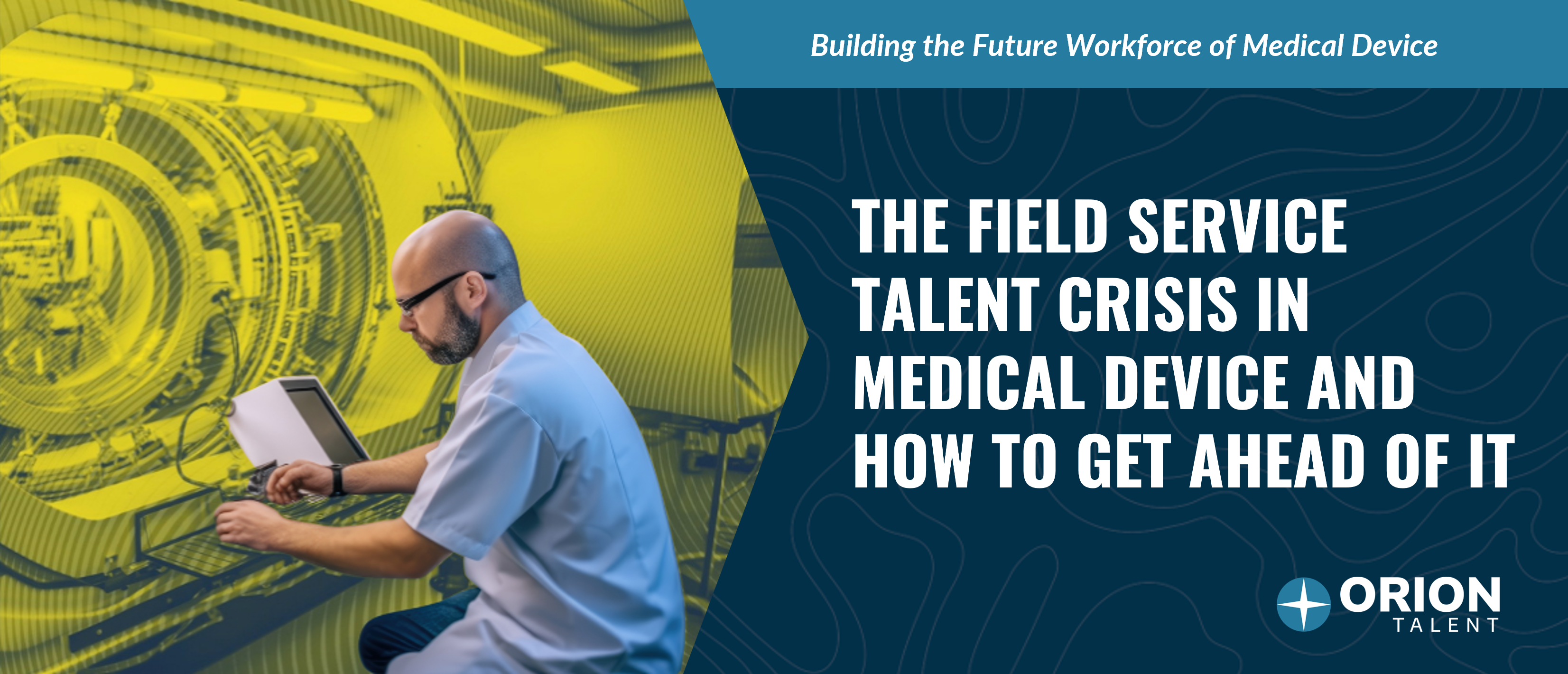
Field Service Engineers remain one of the most difficult and strategically important roles to hire in the medical device industry. They install, repair, and support critical equipment in hospitals, diagnostics labs, and surgical environments. They also represent your brand more directly than almost any other position. Yet the pool of available talent continues to shrink, and the demands of the job keep increasing.
This post is part of our series, Building the Future Workforce of Medical Device, where we examine the trends, challenges, and workforce strategies shaping the future of Medical Device. We are taking a comprehensive look at the forces that influence how medical device companies attract, hire, develop, and retain their talent.
In our earlier posts, we explored the industry’s most persistent shortages, how AI is reshaping skill requirements, why experience-only hiring limits growth potential, and how employment brand influences retention and compliance. In this fifth post, we take a closer look at the field service function and why companies must rethink their approach to finding and developing this essential talent.
The Growing Complexity of Field Service Work
The work of a Field Service Engineer has always required technical skill and customer-facing professionalism. Today, the role demands even more. Modern devices integrate software, networking, robotics, and AI-driven diagnostics in ways that require deeper system-level thinking. At the same time, the job still involves long hours, frequent travel, high-pressure hospital environments, and the need to communicate clearly with clinicians and administrators.
This combination has created a role that is both specialized and demanding. As expectations rise, fewer candidates feel prepared or willing to take on the work. Those who do often receive multiple competing offers, creating fierce competition among employers.
Why Traditional Hiring Models No Longer Work
Most medical device companies still focus on finding candidates with direct industry experience. That approach dramatically limits the talent pool. There are simply not enough experienced Field Service Engineers to meet demand, and many who fit the profile are already employed by competitors.
Meanwhile, highly capable candidates from adjacent fields are often overlooked. Many of them have the technical aptitude, troubleshooting ability, discipline, and customer service mindset needed to excel in the role, but lack narrowly defined industry experience. In a hiring landscape where supply is tight, relying on traditional profile matching is no longer sustainable.
The Case for Skills-Based Hiring in Field Service
Skills-based hiring expands access to talent by focusing on core capabilities rather than specific background. High-performing FSEs frequently come from military electronics and avionics roles, biomedical equipment support, industrial automation, telecommunications, automotive diagnostics, and other technical fields where hands-on problem solving is essential.
When companies build structured onboarding programs that combine device-specific training with strong mentorship, these candidates ramp quickly and often stay longer. They bring discipline, adaptability, and a commitment to mission-driven work that aligns well with the expectations of field service.
Why a Pipeline Matters More Than Ever
The biggest mistake companies make is waiting for a vacancy before recruiting. Field service coverage is too important, and the market moves too quickly. A territory left uncovered for even a short period can strain customer relationships and delay critical service needs.
A strong pipeline strategy anticipates turnover, identifies emerging talent pools, and builds relationships early. It includes better visibility into future territory needs, engagement with high-potential candidates before roles open, and partnerships with organizations that specialize in field service recruiting. When companies plan ahead, they reduce time-to-fill, avoid service disruptions, and strengthen the customer experience.
Retention Starts on Day One
Hiring the right Field Service Engineers is only half the challenge. Keeping them requires a work environment that balances expectations with support. The companies that excel in retention are those that set clear workload expectations, provide adequate training, ensure consistent support from leadership, and offer real growth paths into senior technical or leadership roles.
When FSEs feel valued and supported, they remain committed to the organization, and that stability strengthens both customer satisfaction and long-term revenue.
Ready to Strengthen your Medical Device Workforce?
Check out our Medical Device talent solutions to learn more about how Orion helps companies build skilled, future-ready teams across engineering, quality, field service, sales and operations.
Archives
- October 2026
- September 2026
- August 2026
- July 2026
- June 2026
- May 2026
- April 2026
- March 2026
- February 2026
- January 2026
- December 2025
- November 2025
- October 2025
- September 2025
- August 2025
- July 2025
- June 2025
- May 2025
- April 2025
- March 2025
- February 2025
- October 2024
- May 2024
- March 2024
- February 2024
- January 2024
- December 2023
- November 2023
- October 2023
- September 2023
- August 2023
- July 2023
- June 2023
- May 2023
- April 2023
- March 2023
- February 2023
- January 2023
 RSS Feed