After prolonged vacancies, burnout, and early attrition take hold, many manufacturing leaders reach the same conclusion: hiring must happen faster, but without increasing risk. The challenge is that traditional hiring models often force a false choice between speed and quality, reinforcing the belief that only “perfect fit” candidates can protect performance and safety.
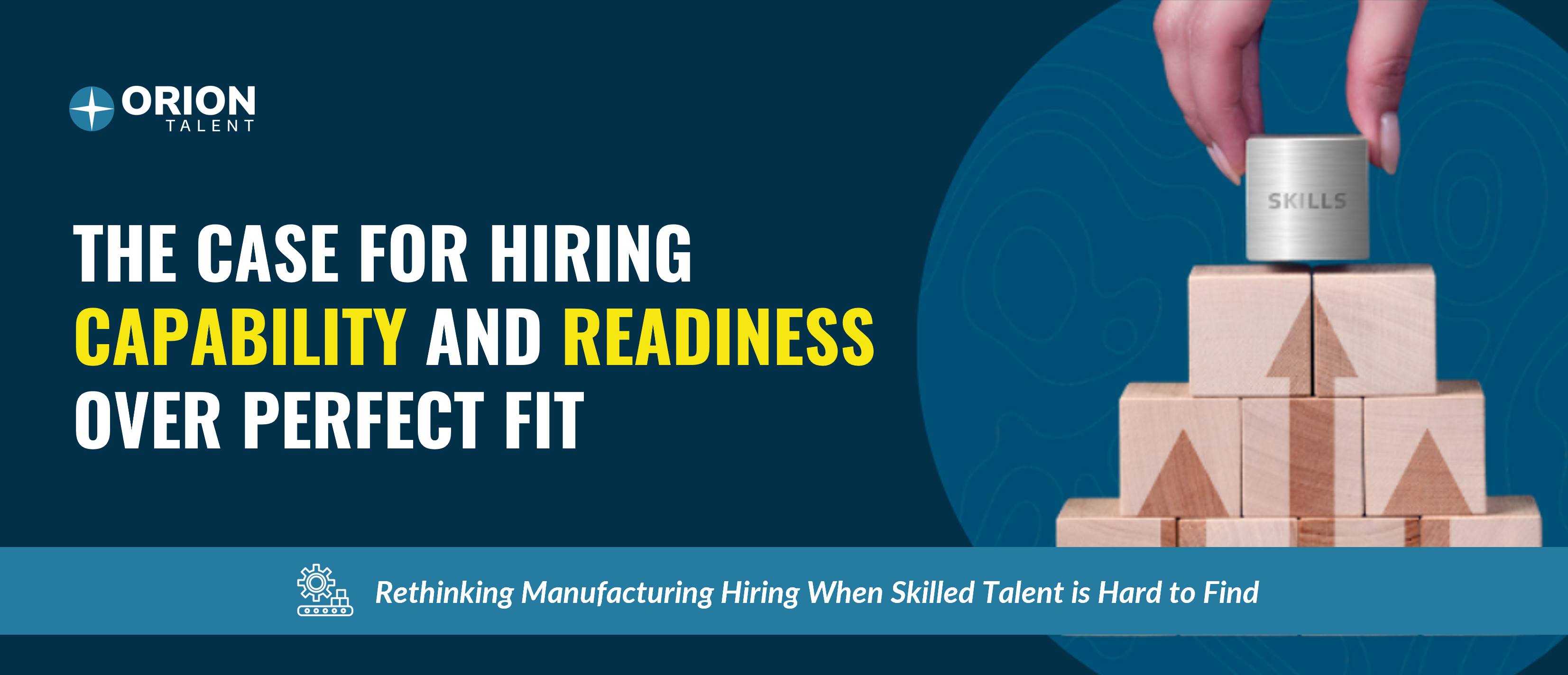
Leading manufacturers are proving otherwise by shifting their focus away from exact resume alignment and toward evaluating capability and readiness.
Why Capability Matters More Than Identical Experience
In maintenance and service environments, success is rarely determined by whether a technician has worked on the exact same equipment in the past. What matters more is how quickly they can diagnose issues, adapt to new systems, and apply foundational skills in real-world conditions.
By evaluating capability, manufacturers widen their lens to include candidates with transferable experience from adjacent industries, military backgrounds, or similar technical environments. These individuals may not check every resume box, but they often bring strong problem-solving ability, discipline, and the capacity to ramp quickly when given structured onboarding and training.
Readiness Reduces Ramp Time and Risk
Readiness focuses on how prepared a candidate is to contribute, not just where they have worked before. This includes baseline technical skills, safety awareness, learning agility, and the ability to perform under pressure.
When hiring teams assess readiness directly, they reduce guesswork. Instead of assuming performance based on past titles, they gain clearer insight into how a candidate will perform in their specific environment. This shortens ramp time, stabilizes teams faster, and reduces the operational strain caused by prolonged vacancies.
A Smarter Way to Balance Speed and Stability
Hiring for capability and readiness does not mean lowering standards. It means aligning hiring criteria with what actually drives performance on the floor.
Manufacturers that make this shift are able to move faster without sacrificing quality. Vacancies close sooner. Overtime pressure eases. Teams regain capacity to focus on preventive work rather than constant reaction. Most importantly, new hires enter the organization with clearer expectations and stronger support, reducing the likelihood of early turnover.
Changing the Hiring Mindset
Moving away from “perfect fit” requires a mindset change as much as a process change. It means recognizing that risk is not reduced by waiting longer for identical experience, but by building hiring systems that surface capable, adaptable talent and support them effectively from day one.
When capability and readiness become the foundation of hiring decisions, manufacturers create more resilient teams and a more sustainable approach to workforce growth. Download How to Tackle Skills Based Hiring in a Changing Job Market to learn more.
In our next post, we will explore how leading maintenance teams are compressing time-to-hire without operational disruption, and what this looks like in practice.
Archives
- September 2026
- August 2026
- July 2026
- June 2026
- May 2026
- April 2026
- March 2026
- February 2026
- January 2026
- December 2025
- November 2025
- October 2025
- September 2025
- August 2025
- July 2025
- June 2025
- May 2025
- April 2025
- March 2025
- February 2025
- October 2024
- May 2024
- March 2024
- February 2024
- January 2024
- December 2023
- November 2023
- October 2023
- September 2023
- August 2023
- July 2023
- June 2023
- May 2023
- April 2023
- March 2023
- February 2023
- January 2023
 RSS Feed