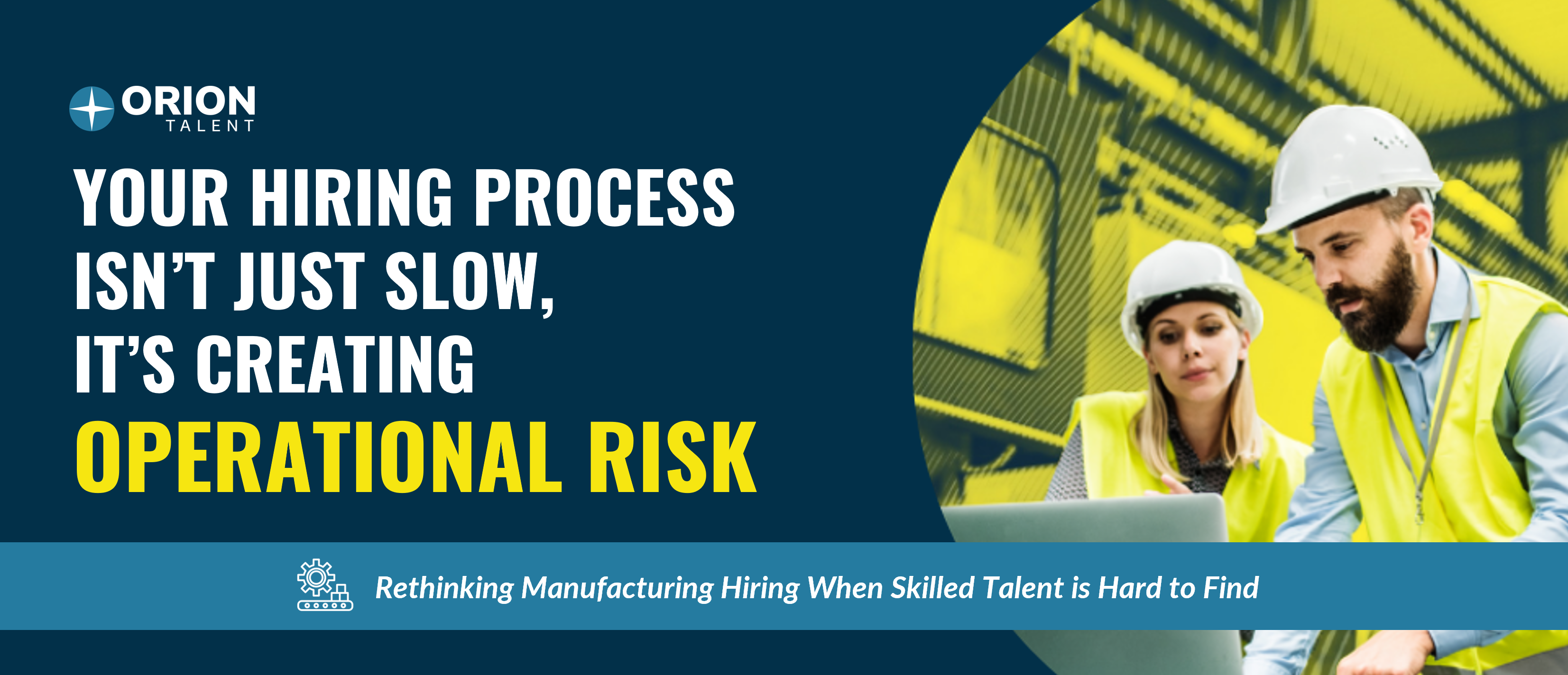
Maintenance and service leaders are used to solving problems under pressure. Equipment fails, schedules shift, and production demands rarely slow down just because staffing is tight. When a critical maintenance or service role stays open longer than expected, it is often treated as an inconvenience rather than a threat.
This assumption is costing manufacturing organizations more than they realize.
Open maintenance and service roles do not sit idle. They quietly increase operational risk across safety, uptime, and workforce stability, even when production appears to be holding steady.
Open Roles Create Hidden Downtime Risk
When a maintenance position remains unfilled, the impact is rarely immediate or dramatic. Machines still run. Orders still ship. But the margin for error shrinks.
Preventive maintenance gets deferred. Response times to unplanned downtime stretch longer. Minor issues that would have been addressed early are allowed to escalate. Over time, this compounds into higher failure rates, longer outages, and greater exposure to costly production interruptions.
What looks like “making do” is often the early stage of avoidable downtime.
Time-to-Fill Delays Multiply Across the Operation
Every additional week a role remains open increases the burden on the rest of the team. Experienced technicians take on extra coverage. Supervisors spend more time filling gaps instead of improving processes. Training and documentation fall behind.
Even when overtime helps bridge the gap, it does not eliminate risk. Fatigue increases error rates. Maintenance quality becomes inconsistent. Safety incidents become more likely, especially during off-shifts and high-demand periods.
The longer the vacancy lasts, the more risk spreads across people, equipment, and output.
Hiring Delays Are an Operational Liability, Not an HR Issue
Many organizations still frame hiring speed as an HR metric rather than an operational one. Time-to-fill is tracked, but rarely connected to downtime, safety exposure, or retention risk.
For maintenance and service teams, this disconnect is dangerous.
A slow hiring process forces leaders into reactive decisions. Temporary fixes replace long-term stability. Teams normalize understaffing until it becomes the standard operating condition. By the time hiring urgency escalates, burnout, attrition, and performance issues are already in motion.
At that point, hiring is no longer about filling a role. It is about stopping the bleeding.
Rethinking Hiring Through a Risk Lens
Manufacturers that consistently outperform their peers do not treat hiring delays as neutral. They recognize that every open maintenance role represents a growing operational liability.
This shift in perspective changes how hiring decisions are made. Speed becomes a risk-mitigation strategy. Evaluation focuses on readiness and capability, not just perfect resumes. Hiring processes are designed to protect uptime, safety, and team stability, not just check boxes.
In today’s high-risk talent market, slow hiring is not cautious. It is costly.
In the next post, we will look at one of the biggest contributors to slow hiring in manufacturing: resume-driven “perfect fit” models that quietly shrink talent pools and extend vacancies far longer than necessary.
Archives
- October 2026
- September 2026
- August 2026
- July 2026
- June 2026
- May 2026
- April 2026
- March 2026
- February 2026
- January 2026
- December 2025
- November 2025
- October 2025
- September 2025
- August 2025
- July 2025
- June 2025
- May 2025
- April 2025
- March 2025
- February 2025
- October 2024
- May 2024
- March 2024
- February 2024
- January 2024
- December 2023
- November 2023
- October 2023
- September 2023
- August 2023
- July 2023
- June 2023
- May 2023
- April 2023
- March 2023
- February 2023
- January 2023
 RSS Feed