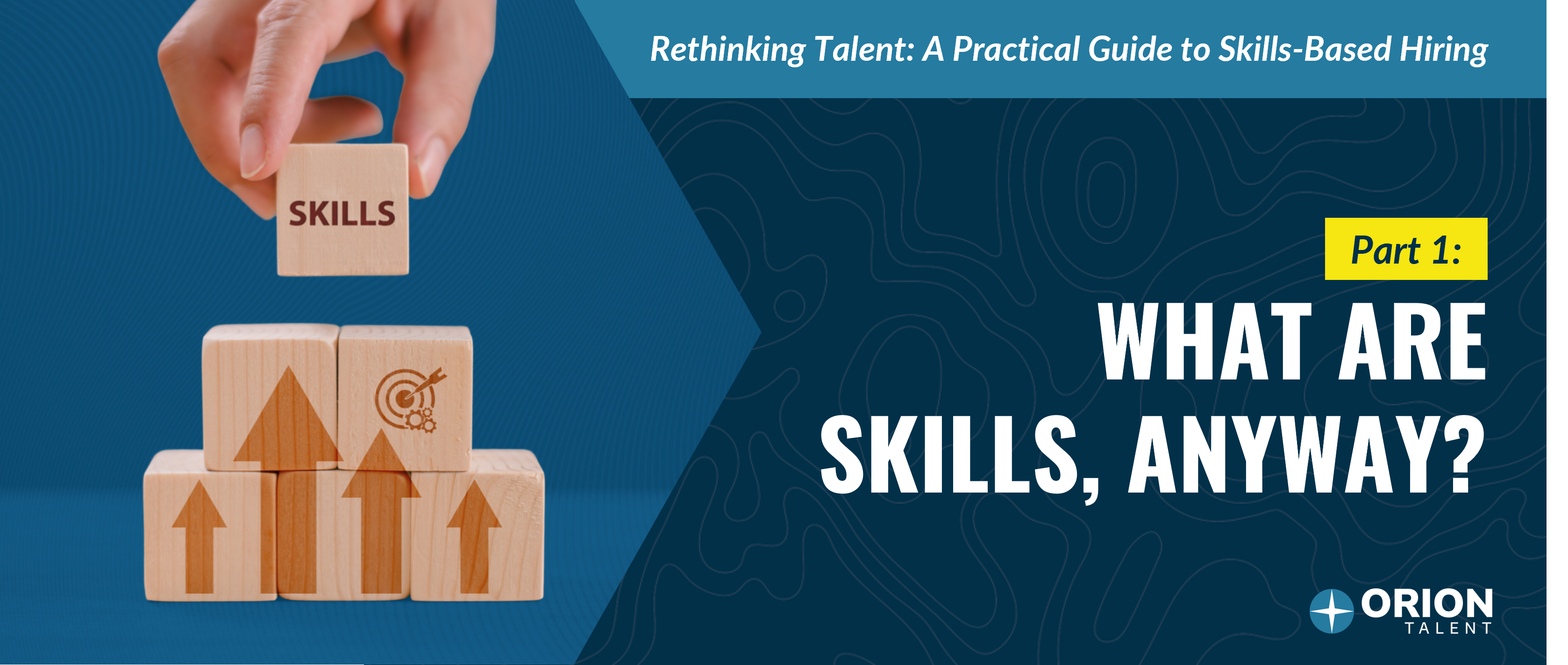
For many manufacturing organizations, hiring still begins and ends with the resume. Years of experience on specific equipment, time spent in the industry, and a career path that closely mirrors the job description are often treated as proxies for readiness and performance.
At first glance, this approach feels cautious and disciplined. In practice, it often produces the very risks it is meant to avoid. By prioritizing exact resume alignment, manufacturers unintentionally narrow their talent pools, slow hiring for critical roles, and increase operational risk at the very moment when speed and adaptability matter most.
How Resume-Driven Screening Limits Access to Talent
Resumes were never designed to measure learning ability, adaptability, or problem-solving under pressure, yet those qualities are essential in maintenance and service environments. When screening decisions rely heavily on past titles and equipment experience, candidates with adjacent or transferable skills are filtered out before any real evaluation takes place.
This disproportionately impacts veterans, technicians transitioning across industries, and high-potential candidates who may not have a perfect resume match but can ramp quickly with the right onboarding and training. The result is a smaller, less diverse candidate pool that does not reflect the actual availability of capable talent.
Why Exact-Match Requirements Slow Hiring
The tighter the definition of “qualified,” the longer critical roles remain open. Maintenance leaders feel this directly on the plant floor, where overtime increases, preventive maintenance is deferred, and supervisors spend more time covering gaps than improving operations.
Ironically, waiting for the perfect resume often creates more disruption than hiring someone who can learn quickly and contribute within weeks. In an environment where downtime and safety risk compound over time, hiring delays driven by overly rigid criteria carry real operational consequences.
The Job Board Volume Problem
Traditional job boards add another layer to the problem. While they generate volume, they rarely deliver candidates who align cleanly with narrow resume requirements. Faced with hundreds of applications, hiring teams default to faster, surface-level screening methods, reinforcing the same filters that are already constraining the pipeline.
This leads many manufacturers to a familiar conclusion: there are plenty of applicants, but very few “qualified” candidates. In reality, the process itself is preventing qualified, capable talent from advancing.
Escaping the Resume Trap
When resumes become the primary gatekeeper, vacancies last longer, teams absorb more strain, and leaders conclude that the talent shortage is insurmountable. The issue is not a lack of people. It is a lack of process designed to identify readiness and potential rather than exact historical fit.
Breaking free from the resume trap requires a shift in mindset. Experience still matters, but it should be evaluated alongside capability, adaptability, and the ability to perform quickly in real-world conditions.
In our next post, we will examine how prolonged vacancies evolve into burnout, downtime, and attrition across manufacturing operations.
Archives
- October 2026
- September 2026
- August 2026
- July 2026
- June 2026
- May 2026
- April 2026
- March 2026
- February 2026
- January 2026
- December 2025
- November 2025
- October 2025
- September 2025
- August 2025
- July 2025
- June 2025
- May 2025
- April 2025
- March 2025
- February 2025
- October 2024
- May 2024
- March 2024
- February 2024
- January 2024
- December 2023
- November 2023
- October 2023
- September 2023
- August 2023
- July 2023
- June 2023
- May 2023
- April 2023
- March 2023
- February 2023
- January 2023
 RSS Feed