
Rethinking the Semiconductor Workforce
Throughout this series, we've explored several workforce trends shaping semiconductor hiring, from the growing competition for technical talent across industries to the geographic redistribution of the workforce and the emergence of alternative talent pipelines.
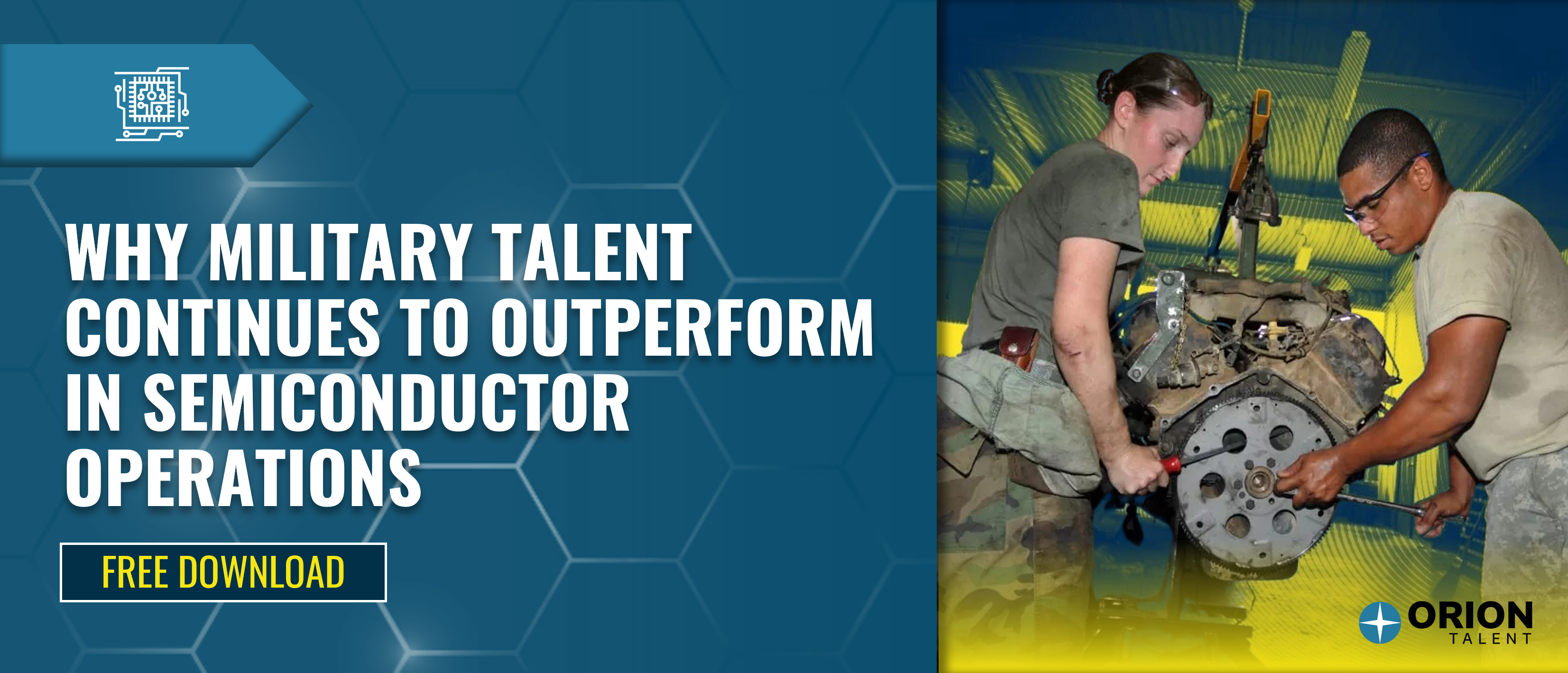
Why Military Talent Continues to Outperform in Semiconductor Operations
As semiconductor employers expand their search for technical talent, many are looking beyond traditional industry boundaries and geographic markets to identify new workforce sources.

The Hidden Talent Markets Semiconductor Employers Should be Watching
As semiconductor employers expand recruiting efforts beyond traditional industry and geographic boundaries, a new question emerges: Where are the most promising talent pools located?

The Semiconductor Workforce Is Going National
In our previous article, we explored how the semiconductor workforce extends well beyond semiconductor manufacturing itself, spanning industries such as engineering services, aerospace, defense, energy, and advanced manufacturing.

The Expanding Competitive Landscape for Semiconductor Talent
The growth of the U.S. semiconductor industry has brought renewed attention to one of its most pressing challenges: securing the technical talent needed to support expansion.

A Scalable Workforce Model for Semiconductor Growth
Semiconductor leaders do not need to be reminded that the labor market is constrained. The pressure is visible in open requisitions, compressed ramp schedules, and increased competition for technical talent. The more important question is whether current hiring systems are built to scale when demand accelerates again.
Future-Ready Hiring Can’t Be Rebuilt Every Cycle
Semiconductor manufacturing has always operated in cycles. Demand accelerates, capital flows, capacity expands, and then markets recalibrate. What has changed is the structural condition of the workforce beneath those cycles . Talent scarcity is no longer a temporary imbalance that resolves during downturns. It is a persistent constraint shaped by demographic trends, increasing technical complexity, geographic expansion, and competition across advanced industries.

New Fabs Require New Talent Ecosystems
Semiconductor expansion is increasingly occurring in regions that historically did not possess deep semiconductor labor markets. While capital deployment for new fabrication facilities can move on predictable timelines, workforce capacity develops far more gradually. The distinction between constructing a facility and cultivating a sustainable labor ecosystem is often underestimated in expansion planning.

Accelerate Hiring Without Increasing Risk
In semiconductor manufacturing, speed is often treated as a tradeoff. Leaders assume that accelerating hiring introduces risk, reduces quality, or increases early turnover. As a result, organizations frequently default to caution, extending interview cycles and narrowing criteria in the name of protecting performance.
Expanding the Domestic Technical Talent Pool
If the semiconductor talent shortage is structural rather than cyclical , then incremental sourcing tactics will not solve it. Organizations must expand the addressable technical talent pool rather than compete repeatedly for the same experienced professionals.
Archives
- October 2026
- September 2026
- August 2026
- July 2026
- June 2026
- May 2026
- April 2026
- March 2026
- February 2026
- January 2026
- December 2025
- November 2025
- October 2025
- September 2025
- August 2025
- July 2025
- June 2025
- May 2025
- April 2025
- March 2025
- February 2025
- October 2024
- May 2024
- March 2024
- February 2024
- January 2024
- December 2023
- November 2023
- October 2023
- September 2023
- August 2023
- July 2023
- June 2023
- May 2023
- April 2023
- March 2023
- February 2023
- January 2023
 RSS Feed