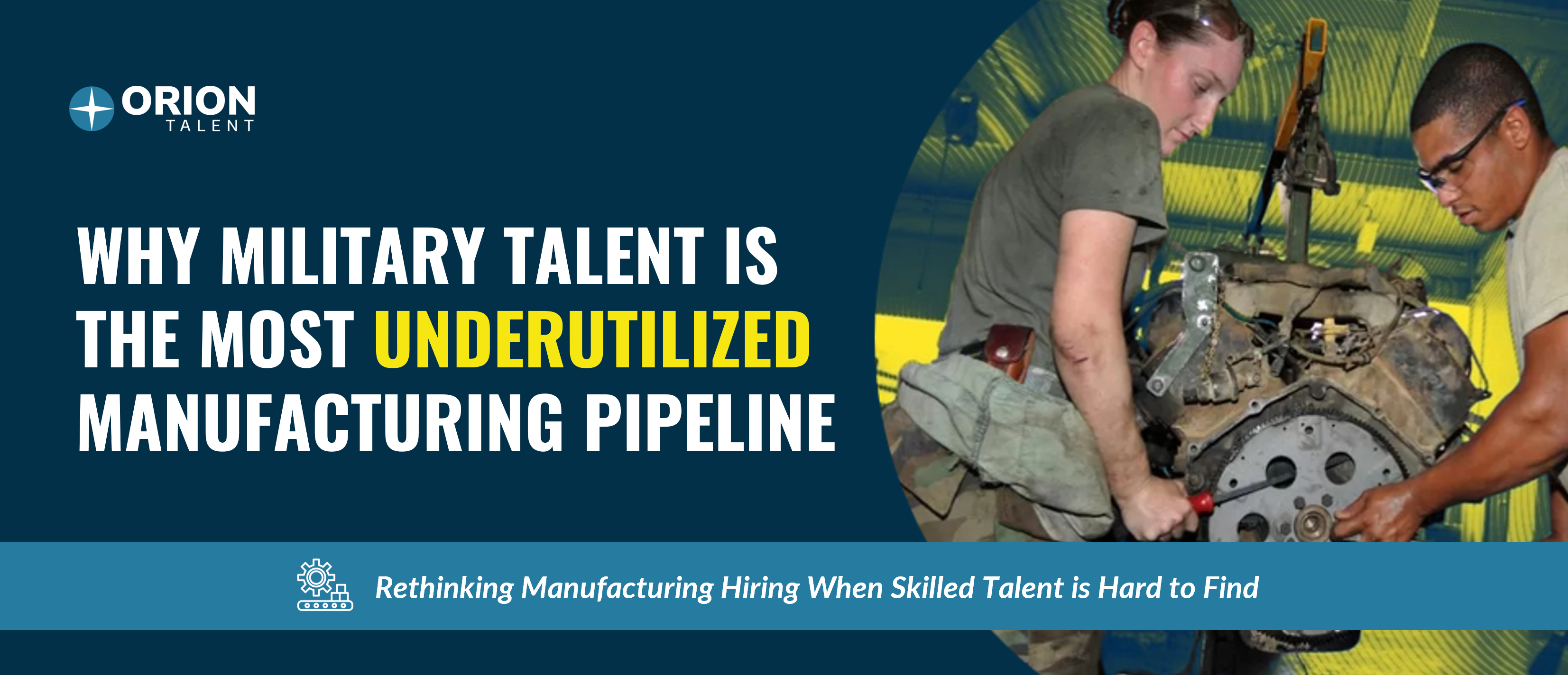
As manufacturers confront persistent vacancies, rising operational risk, and changing skill requirements, one talent pipeline continues to be overlooked despite its scale and readiness: military talent.
Each year, thousands of service members transition into the civilian workforce with technical skills, leadership experience, and a deep familiarity with safety-critical, high-accountability environments. For manufacturers willing to rethink how talent is evaluated and hired, military candidates represent not a future solution, but an available one.
Military Experience Aligns Closely With Manufacturing Needs
Military roles rarely map cleanly to civilian job titles, which has historically made them difficult to assess through resume-driven hiring processes. When evaluated based on capability and readiness rather than exact experience, however, the alignment becomes clear.
Many veterans bring hands-on exposure to mechanical systems, electrical troubleshooting, logistics, quality assurance, and preventive maintenance. They are trained to follow procedures, work under pressure, and operate as part of coordinated teams. These traits mirror the realities of manufacturing environments, particularly in maintenance, service, and production roles.
Readiness and Adaptability Reduce Hiring Risk
One of the most significant advantages military talent offers is readiness. Veterans are accustomed to learning new systems quickly, adhering to strict safety standards, and adapting to changing conditions without sacrificing performance.
When onboarding and expectations are aligned, this readiness shortens ramp time and lowers the likelihood of early turnover. Rather than waiting for perfect resume matches, manufacturers can hire for foundational capability with confidence that new hires will perform reliably as they learn the specifics of the operation.
Scale, Consistency, and Long-Term Impact
Military talent is not a niche workforce segment. It is a continuous, renewable pipeline of skilled candidates entering the labor market across the country every year. When combined with training, skills translation, and structured evaluation, it becomes one of the most scalable ways to stabilize manufacturing workforces.
Employers who successfully integrate military talent into their hiring strategy often see stronger retention, higher engagement, and greater team stability, particularly in roles where discipline, accountability, and teamwork are critical.
The Right Model Unlocks the Pipeline
Despite its potential, military talent remains underutilized because traditional hiring processes struggle to assess it effectively. Resume filters, unfamiliar job titles, and slow timelines create unnecessary barriers that delay or prevent hiring altogether.
Structured hiring models, such as Military Hiring Conferences, remove these obstacles by translating experience, evaluating skills directly, and compressing time-to-hire. This allows manufacturers to assess military candidates based on readiness and fit rather than resume familiarity, accelerating hiring without increasing risk.
From Tactic to Workforce Strategy
Military talent is most effective when it is not treated as a one-off initiative, but as part of a broader workforce strategy. Manufacturers that combine skills-based hiring, improved candidate experience, community partnerships, and structured execution models are proving that workforce shortages are not inevitable.
The opportunity is not simply to hire faster, but to hire differently and build more resilient teams for the long term.
Learn More
To better understand the full scope of today’s manufacturing workforce challenges, and the strategies that work to expand access to talent, download Overcoming the Manufacturing Talent Crisis.
If you are looking for a faster, lower-risk way to evaluate and hire military talent, explore our Military Hiring Conferences to see how manufacturers are rebuilding pipelines through structured, same-day hiring.
Archives
- September 2026
- August 2026
- July 2026
- June 2026
- May 2026
- April 2026
- March 2026
- February 2026
- January 2026
- December 2025
- November 2025
- October 2025
- September 2025
- August 2025
- July 2025
- June 2025
- May 2025
- April 2025
- March 2025
- February 2025
- October 2024
- May 2024
- March 2024
- February 2024
- January 2024
- December 2023
- November 2023
- October 2023
- September 2023
- August 2023
- July 2023
- June 2023
- May 2023
- April 2023
- March 2023
- February 2023
- January 2023
 RSS Feed