
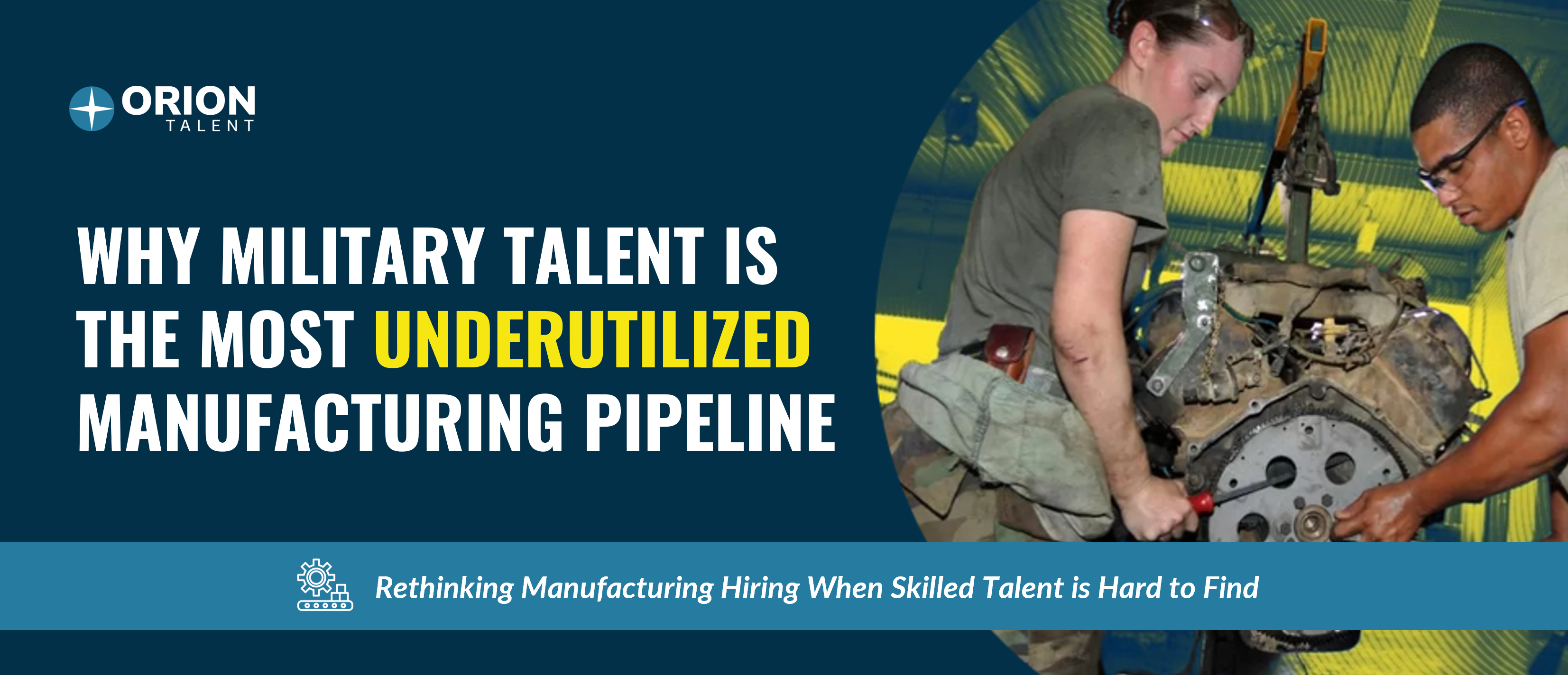
Why Military Talent Is the Most Underutilized Manufacturing Pipeline
As manufacturers confront persistent vacancies, rising operational risk, and changing skill requirements, one talent pipeline continues to be overlooked despite its scale and readiness: military talent.

Skills-First: How to Show Employers What You Can Really Do
Most veterans have done far more in their military careers than a civilian resume can capture. You have led teams, solved problems, trained others, adapted quickly, and delivered results under pressure. These strengths are powerful, yet many candidates struggle to show employers what they can actually do.
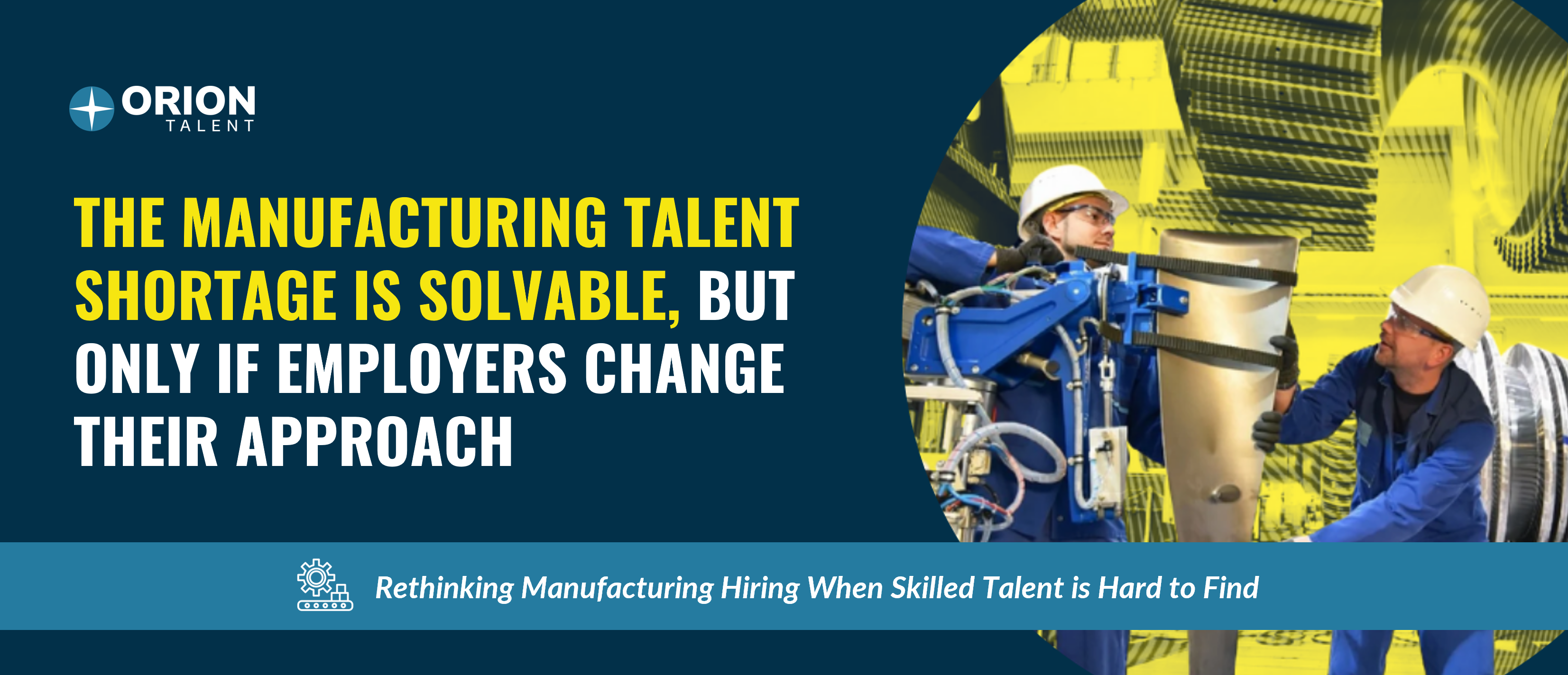
The Manufacturing Talent Shortage is Solvable, but Only if Employers Change Their Approach
For many manufacturing leaders, workforce shortages feel inevitable. An aging workforce, fewer traditional entrants into the trades, and persistent turnover have created the impression that constrained labor is simply the cost of doing business in today’s environment.
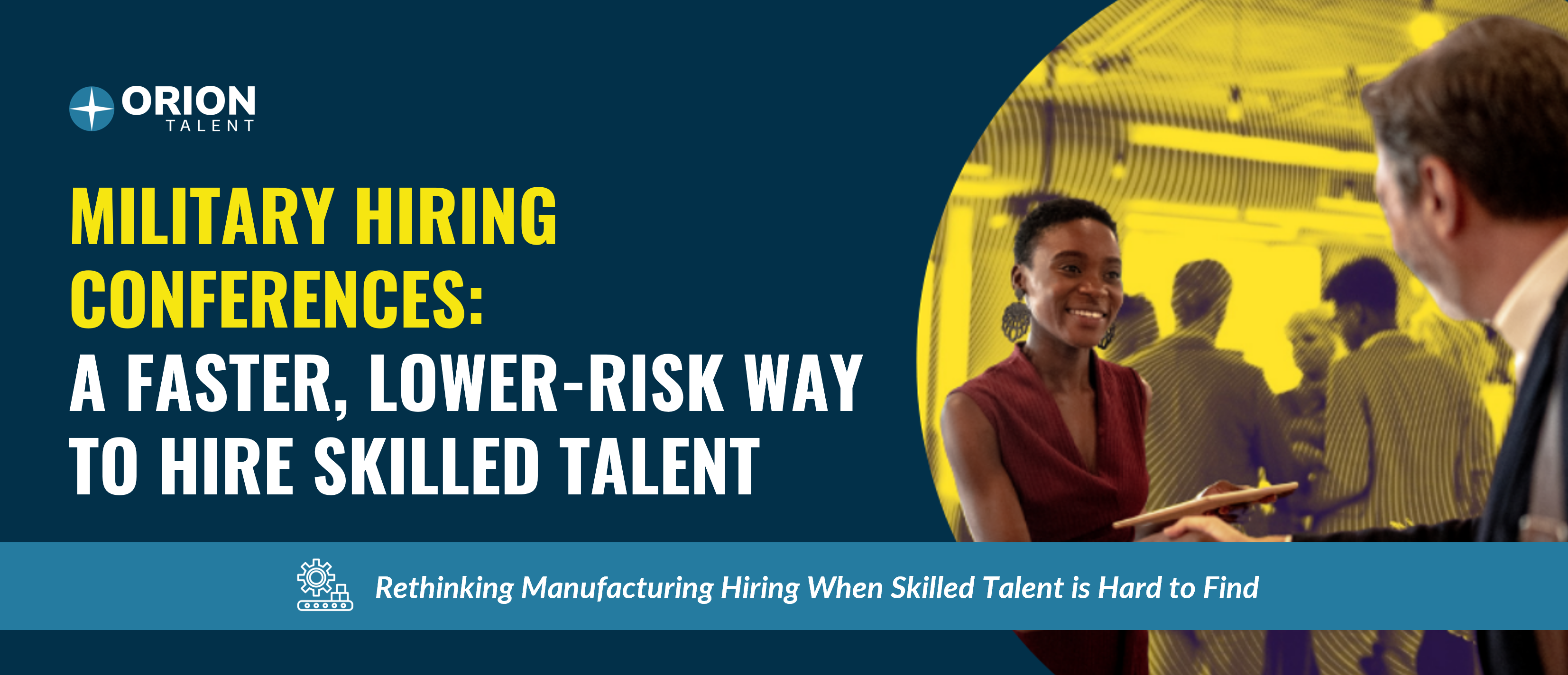
Military Hiring Conferences: A Faster, Lower-Risk Way to Hire Skilled Talent
When manufacturing leaders hear “accelerated hiring,” the immediate concern is risk. Speed is often associated with shortcuts, misalignment, and early turnover, especially in maintenance and service roles where safety, uptime, and reliability matter.

Staying Too Comfortable Can Hold You Back
It is natural to want stability after your military career. A reliable job, predictable schedule, and familiar routine can bring a sense of comfort during a major life transition. But for many veterans, that comfort can slowly become something else: career stagnation.
How Leading Maintenance Teams Compress Time-to-Hire Without Operational Disruption
Once manufacturers move away from resume-driven “perfect fit” hiring and begin evaluating capability and readiness, the next challenge becomes execution. Even with the right mindset, many organizations still struggle to translate that shift into faster hiring outcomes without introducing new risk to already stretched operations.
The Case for Hiring Capability and Readiness Over Perfect Fit
After prolonged vacancies, burnout, and early attrition take hold, many manufacturing leaders reach the same conclusion: hiring must happen faster, but without increasing risk. The challenge is that traditional hiring models often force a false choice between speed and quality, reinforcing the belief that only “perfect fit” candidates can protect performance and safety.

You Do Not Need Technical Experience to Stand Out
Many veterans hesitate to pursue new career opportunities because they believe they need technical experience, specific certifications, or industry credentials before they can be considered. This belief keeps talented candidates from exploring roles where they could excel and grow quickly.
When Vacancies Turn Into Burnout, Downtime, and Early Turnover
In manufacturing environments, unfilled maintenance and service roles rarely slow production in obvious ways. Work continues, schedules are adjusted, and teams compensate to keep operations running. While this flexibility is often viewed as a strength, it can also mask the growing strain that prolonged vacancies place on people, equipment, and performance.
The Resume Trap: “Perfect Fit” Hiring is Shrinking Your Talent Pool
For many manufacturing organizations, hiring still begins and ends with the resume. Years of experience on specific equipment, time spent in the industry, and a career path that closely mirrors the job description are often treated as proxies for readiness and performance.
Archives
- October 2026
- September 2026
- August 2026
- July 2026
- June 2026
- May 2026
- April 2026
- March 2026
- February 2026
- January 2026
- December 2025
- November 2025
- October 2025
- September 2025
- August 2025
- July 2025
- June 2025
- May 2025
- April 2025
- March 2025
- February 2025
- October 2024
- May 2024
- March 2024
- February 2024
- January 2024
- December 2023
- November 2023
- October 2023
- September 2023
- August 2023
- July 2023
- June 2023
- May 2023
- April 2023
- March 2023
- February 2023
- January 2023
 RSS Feed