AI is already entering talent acquisition through recruiting platforms, productivity tools, and individual experimentation. Adoption is happening now, one feature and use case at a time.
That makes an AI strategy essential.
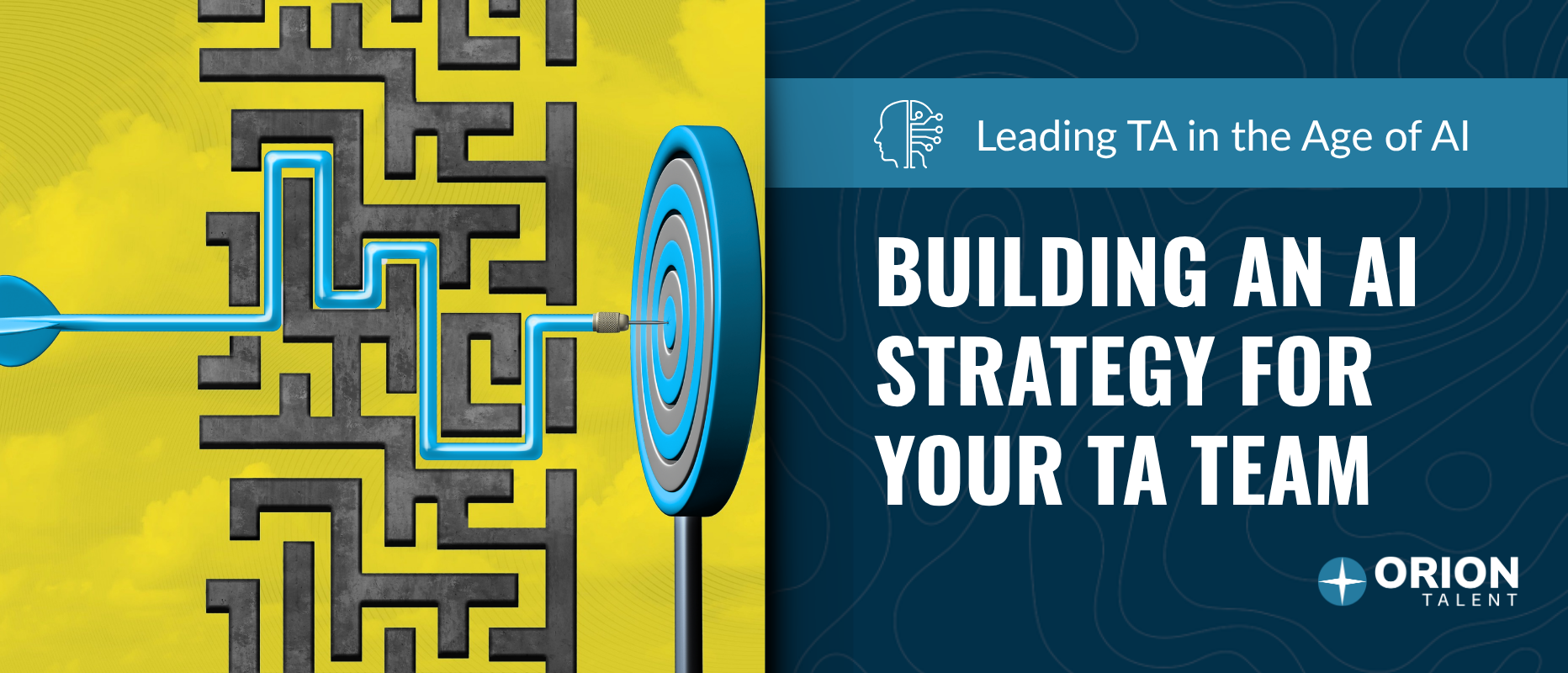
Without a clear strategy, teams may invest in disconnected tools, automate inefficient processes, or add activity without improving outcomes. A thoughtful plan connects AI to business priorities, people, processes, technology, and governance.
Start With Business Priorities
An AI strategy should not begin with a list of available tools. It should begin with the talent challenges affecting the business.
Where is the organization struggling to find talent? Which roles create delays? Where are recruiters spending time on repetitive work? Which decisions would improve with stronger data?
Answering these questions helps leaders identify where AI can create meaningful value. It also prevents the strategy from becoming a collection of unrelated experiments.
Each use case should connect to a specific goal, such as expanding the qualified talent pool, improving candidate communication, increasing recruiter capacity, strengthening workforce insights, or reducing unnecessary delays. Leaders can then prioritize opportunities based on potential value, implementation effort, data readiness, and risk.
Starting small is often the right approach, but every pilot should support a broader direction.
Prepare Recruiters for New Expectations
Technology alone will not create better recruiting. Recruiters and sourcers need the skills and confidence to use AI effectively.
AI fluency includes knowing how to select an appropriate tool, create useful inputs, evaluate outputs, protect sensitive information, and recognize when human judgment is required. Teams also need to understand the limitations of each solution and remain accountable for the work it supports.
Training should extend beyond tool instructions. Recruiters need opportunities to practice, share lessons, and develop consistent standards reinforced through coaching and quality reviews.
As AI takes on more administrative work, recruiter capabilities must also evolve. Greater capacity should be redirected toward advising hiring managers, interpreting market data, engaging talent, and improving decisions. An AI strategy should define not only what technology will do, but how the recruiter role will become more valuable as a result.
Redesign the Workflow
Adding AI to an existing process does not automatically improve it. If the workflow contains unnecessary steps, unclear ownership, or poor handoffs, automation may simply move those problems faster.
Before implementation, map where time, information, or candidates are being lost. Then determine where AI can assist and where human involvement creates the most value.
The redesigned workflow should make responsibilities clear. Teams need to know when AI is generating content, presenting a recommendation, or influencing a decision. They also need defined points for review, approval, and escalation.
This work should include the systems around the tool. Data flow, integrations, reporting, and user access all influence whether a new capability becomes part of the operating model or remains an isolated feature.
Build Governance Into the Strategy
Governance should develop alongside adoption, not after AI has already scaled.
Every use case should have an owner, an approved purpose, clear rules for data use, and an appropriate level of human oversight. Higher-impact applications, such as screening or ranking candidates, require more scrutiny than lower-impact administrative uses.
TA leaders should partner with legal, IT, privacy, and procurement to evaluate risk and establish expectations. They should define how tools will be tested, monitored, documented, and reconsidered as conditions change.
Clear governance gives teams confidence to innovate within understood boundaries.
Define What Success Looks Like
An AI strategy needs measures that extend beyond time saved. Efficiency matters, but it is only valuable when it contributes to better recruiting and business outcomes.
Success measures may include talent pool quality, candidate engagement, recruiter adoption, hiring manager satisfaction, process consistency, cost, speed, or the quality of insights delivered to the business. The right measures will depend on the original use case.
Leaders should establish a baseline and review results and user feedback. If a tool increases activity without improving outcomes, the team should adjust or stop using it.
AI adoption will continue whether organizations approach it intentionally or reactively. The teams that gain the most value will connect technology to business goals, prepare their people, redesign their processes, establish responsible governance, and measure what matters.
Every talent acquisition team needs an AI strategy because AI is no longer a separate technology initiative. It is becoming part of how the function operates.
To learn how Orion Talent can help build a future-ready talent acquisition strategy, contact our team to start the conversation.
Archives
- October 2026
- September 2026
- August 2026
- July 2026
- June 2026
- May 2026
- April 2026
- March 2026
- February 2026
- January 2026
- December 2025
- November 2025
- October 2025
- September 2025
- August 2025
- July 2025
- June 2025
- May 2025
- April 2025
- March 2025
- February 2025
- October 2024
- May 2024
- March 2024
- February 2024
- January 2024
- December 2023
- November 2023
- October 2023
- September 2023
- August 2023
- July 2023
- June 2023
- May 2023
- April 2023
- March 2023
- February 2023
- January 2023
 RSS Feed