Talent sourcing has long depended on titles, keywords, locations, and industry experience. Those filters can narrow a large market, but they can also reinforce familiar patterns and overlook qualified people.
Artificial intelligence creates an opportunity to search differently. It can analyze larger talent pools, connect related skills, recognize transferable experience, tailor outreach, and support more informed decisions.
The opportunity is significant, but AI alone will not create a stronger sourcing strategy. Technology can surface possibilities. Recruiters must determine which possibilities make sense.
Move From Keywords to Skills
Traditional searches often depend on candidates using expected language. That approach can miss people with different titles, industry experience, or ways of describing their capabilities.
AI-supported sourcing can look beyond exact keyword matches to identify the skills, experiences, and patterns associated with a role. This allows recruiters to begin with a more important question: What must someone be able to do to succeed?
That shift can expand the available talent pool, but it requires a well-defined target. Before searching, hiring teams must distinguish between essential skills, preferred experience, and qualifications that may simply reflect how the role has been filled in the past.
When the criteria are clear, AI can help recruiters find talent that a narrower search might never reveal.
Discover Adjacent and Transferable Talent
Some of the strongest candidates do not come from obvious places. They may have developed relevant capabilities in another occupation, industry, or environment. A military technician, for example, may bring technical expertise, leadership, adaptability, and experience under pressure without following a traditional civilian career path.
AI can help identify these connections at scale by mapping related skills and career pathways. It can show where talent may exist outside the usual competitors and which candidates possess the foundation to learn what they do not yet know.
Recruiter expertise remains critical. A tool may recognize that two roles share certain skills, but the recruiter must understand whether those similarities are meaningful, what gaps remain, and how a candidate’s experience could translate into performance.
Personalize Outreach Without Losing the Person
AI can help recruiters create relevant outreach by summarizing a candidate’s background and identifying connections to a role. This can reduce research time and make messages more specific.
Used poorly, it can simply produce generic outreach at greater volume.
Personalization is not the same as inserting a candidate’s name, title, or employer into a template. Strong outreach demonstrates that the recruiter understands something meaningful about the person’s experience and can explain why the opportunity may be relevant.
AI can provide a starting point, but recruiters should review every message for accuracy, tone, and context. The goal is not to automate the relationship. It is to give recruiters more capacity to begin better conversations.
Turn Labor Market Data Into Sourcing Decisions
AI becomes even more valuable when it helps recruiters interpret the market around a role. Talent supply, compensation, geography, competitor demand, and skill availability all influence whether a sourcing strategy is realistic.
Recruiters can advise hiring managers on where talent is concentrated, which requirements restrict the pool, and whether a different location or skills profile could improve results. They can also identify emerging talent markets before competitors do.
The value is not the data alone. It is the recruiter’s ability to translate that data into an actionable recommendation.
Keep Human Judgment at the Center
AI-generated match scores and rankings can help recruiters manage large candidate pools, but they should not become unexplained answers. In a recent Dice article about AI-supported hiring decisions, Orion Talent CEO Greg Summers emphasized that employers must be able to trace recommendations to the information behind them and validate those insights through human judgment.
That principle begins in sourcing. Recruiters should understand why a candidate was surfaced, which skills influenced the match, and what context the system may have missed. They also need authority to challenge a recommendation.
AI can help talent acquisition teams search more broadly, act more quickly, and make better use of market information. Human recruiters bring the curiosity to explore an unconventional background, the judgment to assess potential, and the credibility to turn insight into action.
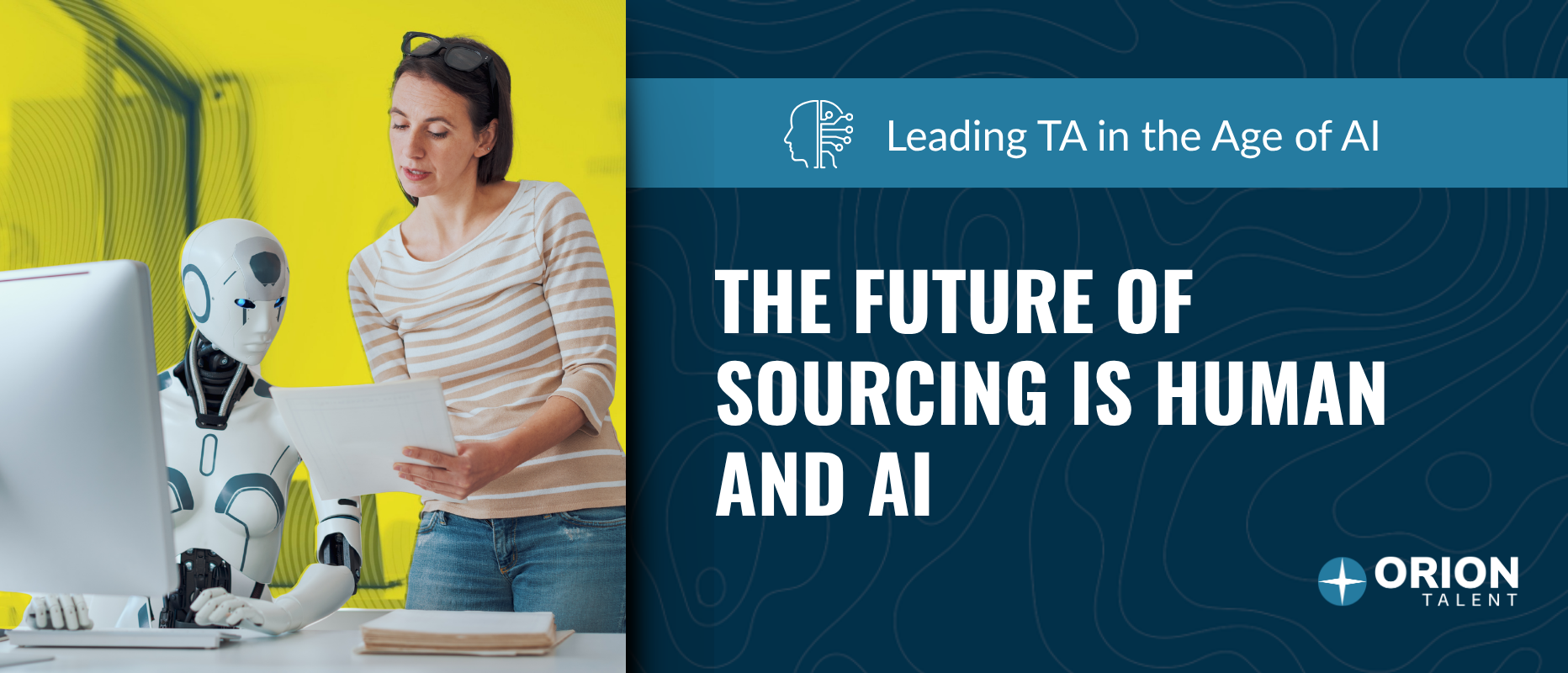
The future of sourcing will not be human or AI. Its advantage will come from combining both.
To learn how Orion Talent can help your organization build a stronger sourcing strategy and connect with highly skilled talent, contact our team.
Archives
- October 2026
- September 2026
- August 2026
- July 2026
- June 2026
- May 2026
- April 2026
- March 2026
- February 2026
- January 2026
- December 2025
- November 2025
- October 2025
- September 2025
- August 2025
- July 2025
- June 2025
- May 2025
- April 2025
- March 2025
- February 2025
- October 2024
- May 2024
- March 2024
- February 2024
- January 2024
- December 2023
- November 2023
- October 2023
- September 2023
- August 2023
- July 2023
- June 2023
- May 2023
- April 2023
- March 2023
- February 2023
- January 2023
 RSS Feed