The conversation about artificial intelligence in recruiting often begins with efficiency. AI can help draft outreach, summarize candidate information, coordinate schedules, surface potential matches, and reduce the administrative work that consumes so much of a recruiter’s day.
Those capabilities matter. But the greatest opportunity is not simply helping recruiters complete the same work faster. It is giving them more capacity to do the work that creates the most value.
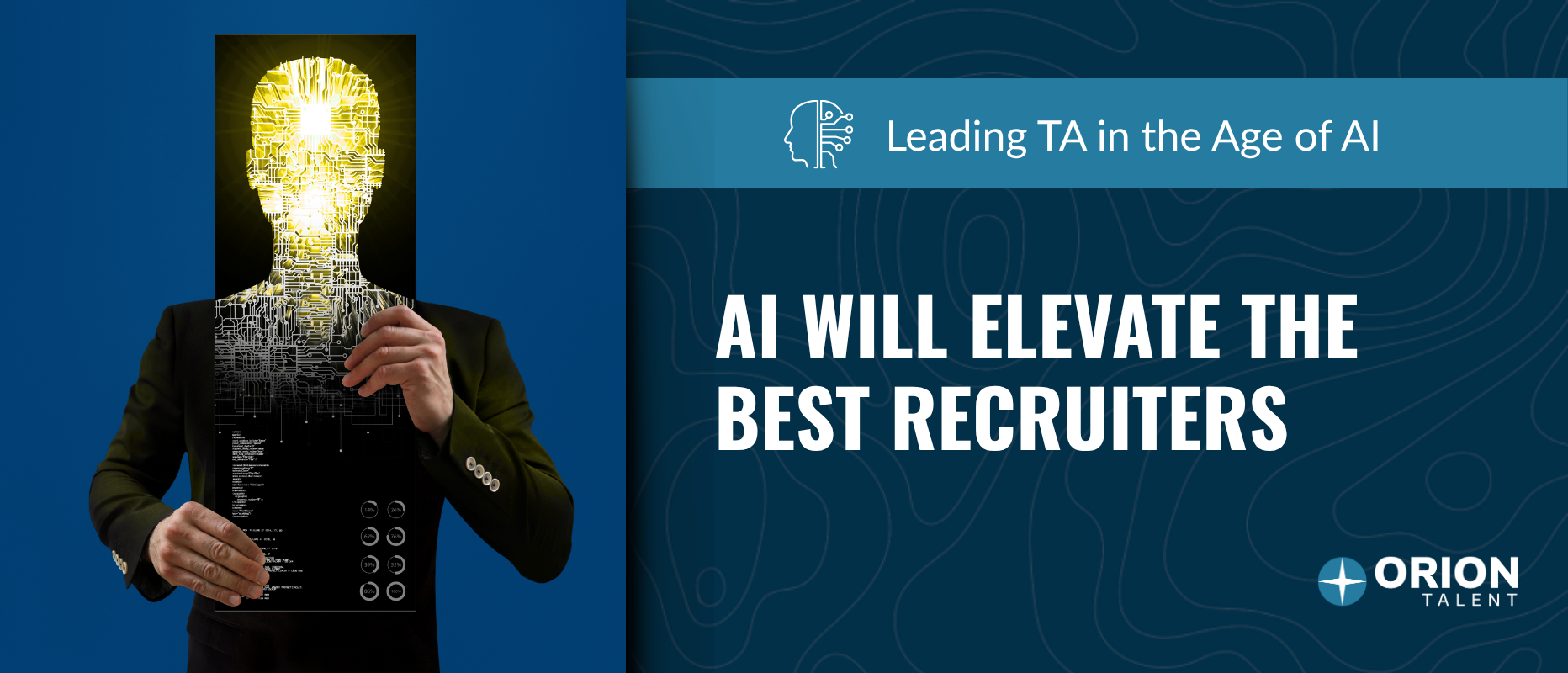
As we explored in How AI Is Transforming Recruitment: The Rise of “Super Recruiters”, AI can combine speed, scale, and data with the empathy, intuition, and relationship-building skills of an experienced recruiter. The result is not a diminished recruiter role. It is an elevated one.
The best recruiters will use AI to become stronger talent advisors, more informed business partners, and more effective advocates for both candidates and hiring teams.
AI Changes Where Recruiters Spend Their Time
Recruiters are adept at balancing high-value work with a heavy volume of administrative tasks. They review applications, search databases, schedule interviews, update systems, create communications, and follow up with candidates and hiring managers. Each task may be necessary, but together they can leave little time for strategic work.
AI can begin to shift that balance. When technology supports repetitive and time-consuming activities, recruiters can devote more attention to understanding the business need behind a requisition, advising hiring managers, engaging hard-to-reach talent, and improving the candidate experience. The goal is not to remove recruiters from the process, but to create more room for the work that requires their expertise.
That distinction matters, because saving time is only the first step. Talent acquisition leaders must also decide how that capacity should be reinvested.
Recruiters Become Talent Advisors
An elevated recruiter does more than fill an open position. They understand why the role matters, what outcomes the new hire must deliver, and how the organization’s talent needs may change over time.
With better access to data and AI-supported insights, recruiters can bring more informed questions to hiring conversations:
-
Are the requirements for this role realistic in the current market?
-
Which skills are truly essential, and which can be developed?
-
Are there candidates in adjacent industries or occupations who could succeed?
-
Is compensation aligned with market conditions?
-
Where is the hiring process creating unnecessary delay or candidate loss?
The recruiter who can answer these questions is a more valuable partner to hiring managers and workforce leaders. Instead of receiving a requisition and beginning a search, that recruiter helps shape the hiring strategy from the start, well before an opening exists.
Human Skills Become More Valuable, Not Less
As AI becomes more capable, distinctly human skills will become even more important.
Recruiting decisions are rarely as simple as matching a list of keywords. Candidates bring context, motivation, potential, and transferable experience that may not be obvious from a resume. Hiring managers bring competing priorities, assumptions, and sometimes unrealistic expectations. Recruiters must interpret all of that information and guide both sides toward a sound decision.
AI can identify patterns and present options. It cannot fully understand what motivates a candidate, build trust during a career transition, challenge a hiring manager with credibility, or recognize when an unconventional background may be exactly what a team needs.
The strongest recruiters will pair technological fluency with curiosity, empathy, communication, influence, and judgment. They will know when to trust an AI-supported insight, when to question it, and when the situation requires a deeper human conversation.
AI Fluency Will Be a Core Recruiting Capability
Organizations cannot realize the value of AI by purchasing a tool and expecting recruiters to adapt on their own. Recruiters need the confidence and skill to use AI effectively, responsibly, and in ways that improve outcomes.
AI fluency does not require every recruiter to become a technologist. It does require them to understand what a tool is designed to do, what data informs its recommendations, where errors or bias may occur, and when human review is essential.
Practical training should help recruiters learn how to:
-
Use AI to support research, sourcing, communication, and workflow management
-
Write effective prompts and refine AI-generated outputs
-
Evaluate recommendations instead of accepting them automatically
-
Protect candidate and company information
-
Recognize potential bias or gaps in the data
-
Preserve personalization and human connection throughout the process
This is not a one-time training exercise. AI capabilities are changing quickly, and recruiter development must evolve with them. Teams need opportunities to experiment, share lessons, and establish clear standards for responsible use.
The Best Recruiters Will Set a Higher Standard
AI may make certain recruiting activities faster and easier across the market. That does not mean every organization will achieve the same results.
The advantage will belong to teams that use AI to raise the quality of recruiting, not simply increase the volume of activity. More messages, more profiles, and more automation do not automatically create a better hiring experience. In some cases, they can add noise and make recruiting feel less personal.
The best recruiters will use AI with intention. They will apply it where it improves speed, consistency, or insight, while remaining personally engaged where judgment and trust matter most. They will spend less time moving information and more time interpreting it. They will bring stronger market intelligence to hiring managers and more relevant, responsive communication to candidates. And most importantly, they will remain accountable for the outcome.
Elevating the Recruiter Role Starts Now
AI is already reshaping talent acquisition, but the future of the recruiter role is not predetermined. Leaders have a choice in how they introduce the technology, how they redesign work, and how they prepare their teams.
Organizations that focus only on automation may gain efficiency. Organizations that also invest in their recruiters can gain something more valuable: a talent acquisition function that is more strategic, more consultative, and better equipped to support the business.
AI will not make every recruiter exceptional. But in the hands of skilled, curious, and business-minded professionals, it can elevate what the best recruiters are able to accomplish.
To explore how Orion Talent can help your organization strengthen its recruiting strategy and build a future-ready workforce, please contact our team to start a conversation.
Archives
- October 2026
- September 2026
- August 2026
- July 2026
- June 2026
- May 2026
- April 2026
- March 2026
- February 2026
- January 2026
- December 2025
- November 2025
- October 2025
- September 2025
- August 2025
- July 2025
- June 2025
- May 2025
- April 2025
- March 2025
- February 2025
- October 2024
- May 2024
- March 2024
- February 2024
- January 2024
- December 2023
- November 2023
- October 2023
- September 2023
- August 2023
- July 2023
- June 2023
- May 2023
- April 2023
- March 2023
- February 2023
- January 2023
 RSS Feed