Employers across industries continue to struggle with persistent skills gaps that threaten growth across America’s critical industries. At the same time, thousands of highly trained service members transition from the military each year with technical expertise, leadership experience and a demonstrated ability to learn quickly.
Why, then, does military talent remain one of the most underutilized sources of skilled professionals?
The challenge is not a lack of relevant experience. It is often a failure to recognize how military experience translates to the civilian workplace.
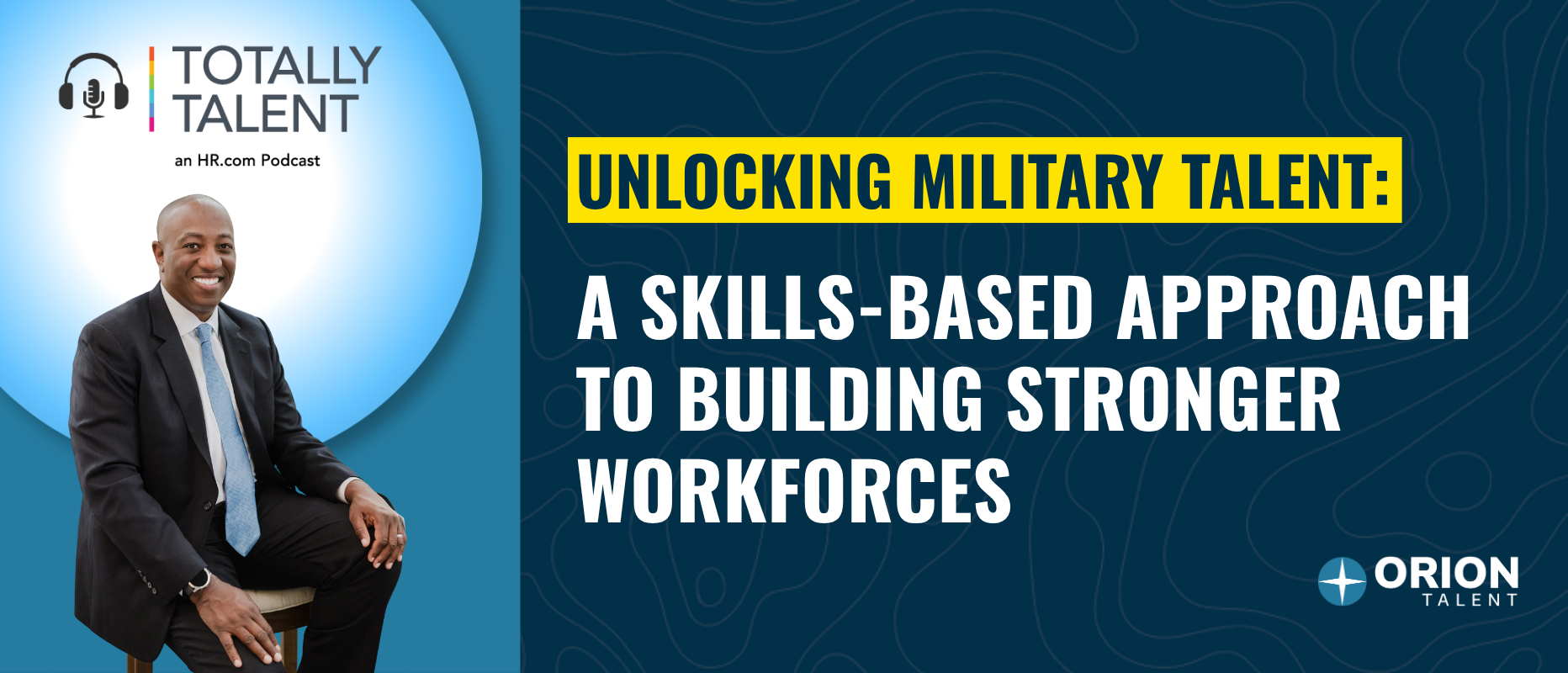
Orion Talent CEO Greg Summers recently joined Mike Wood on HR.com’s Totally Talent podcast to discuss how employers can overcome that disconnect, expand their talent pipelines and build a more effective skills-based approach to hiring.
Skilled Talent May Be Hidden Behind Unfamiliar Experience
Traditional hiring processes tend to favor candidates whose backgrounds look familiar. Recruiters search for recognized job titles, conventional career paths and experience performing the same work in a similar environment.
Military careers rarely fit neatly within those parameters.
A service member may have led teams, managed highly technical equipment, maintained complex systems or coordinated time-sensitive operations without ever holding the civilian job title an employer expects to see. When hiring teams focus too narrowly on titles and credentials, candidates with the right capabilities can be screened out before their experience is fully understood.
This is one reason employers must become better at identifying potential and transferable skills, rather than simply matching candidates to familiar résumé profiles. Military talent offers a powerful example of why that shift matters.
Skills Translation Is the Critical Bridge
Military candidates bring experience that applies across a wide range of civilian functions and industries. Depending on their backgrounds, they may offer strengths in areas such as:
- Technical maintenance and troubleshooting
- Operations and logistics
- Team leadership and development
- Safety and regulatory compliance
- Project and resource management
- Communication and collaboration
- Decision-making under pressure
- Adaptability in changing environments
The difficulty is that these capabilities may be described through military occupations, terminology or accomplishments that civilian recruiters and hiring managers do not immediately recognize.
Effective military hiring requires organizations to look beneath that language. What work did the candidate perform? What equipment, processes or people did they manage? What problems were they responsible for solving? Which civilian roles require those same underlying capabilities?
This does not mean lowering hiring standards. It means recognizing that qualified talent can acquire relevant skills through more than one path.
Employers can start by reviewing job descriptions and separating truly essential requirements from customary preferences. If a degree, certification or exact industry background is not necessary to perform the role successfully, it should not become an automatic barrier.
Recruiters and hiring managers must also be equipped to evaluate military experience consistently. Skills translation should be built into the recruiting process, rather than left entirely to candidates who may be navigating the civilian job market for the first time. Organizations can use a structured assessment to determine whether their military talent strategy is moving from intent to execution.
Military Hiring Offers a Blueprint for Skills-Based Hiring
The value of this approach extends beyond veteran recruiting. In fact, military hiring offers a proven blueprint for building a skills-based workforce. Organizations that learn to translate military experience become better at evaluating transferable skills across their entire talent pipeline. The same principles can help employers recognize the potential of early-career candidates, skilled tradespeople, apprentices, career changers and workers from other nontraditional backgrounds.
Instead of asking whether someone has already held an identical position, hiring teams can consider:
- Which skills are truly required to succeed?
- Which capabilities can transfer from another environment?
- What can be taught after hiring?
- Which experiences demonstrate the ability to learn and adapt?
- Are traditional qualifications excluding people who could perform the work?
These questions help employers move from a résumé-matching exercise to a more practical assessment of what candidates can contribute. For example, Siemens Mobility is building a future-ready military talent pipeline by connecting transitioning service members and veterans with roles that draw on their mechanical aptitude, troubleshooting ability, initiative and leadership.
That shift is increasingly important as technology changes jobs and organizations compete for emerging skills. Employers may not find enough candidates who meet every traditional qualification. They will need to recognize adjacent experience, invest in development and create more pathways into critical roles.
Technology Can Help Employers See More Potential
Technology and AI are giving talent acquisition teams new ways to identify skills, match candidates with opportunities, and uncover connections that may not be obvious from a job title alone.
Used thoughtfully, these tools can help employers recognize transferable capabilities and surface qualified people from a wider range of backgrounds. But technology cannot solve the problem if it is built around the same narrow criteria that caused employers to overlook those candidates in the first place.
Organizations must first understand which skills matter, how those skills appear across different experiences and where bias or unnecessary requirements may be restricting the pipeline. Technology should support that strategy, not substitute for it.
Human understanding remains particularly important for military candidates. A productive conversation can reveal leadership, technical experience and responsibility that a résumé or automated screen might miss.
Unlocking a Proven Source of Talent
Employers do not always need to discover an entirely new source of talent. Sometimes they need a better way to recognize the talent already available.
Military professionals bring valuable skills, leadership and experience to the civilian workforce. Organizations that learn how to identify and translate those capabilities can fill critical roles while building a broader, more adaptable approach to hiring.
Listen to Greg Summers’ full conversation on HR.com’s Totally Talent podcast to learn more about unlocking military talent and creating a skills-based workforce.
By looking beyond familiar credentials and career paths, employers can connect capable people with meaningful opportunities and build a stronger workforce in the process.
Archives
- October 2026
- September 2026
- August 2026
- July 2026
- June 2026
- May 2026
- April 2026
- March 2026
- February 2026
- January 2026
- December 2025
- November 2025
- October 2025
- September 2025
- August 2025
- July 2025
- June 2025
- May 2025
- April 2025
- March 2025
- February 2025
- October 2024
- May 2024
- March 2024
- February 2024
- January 2024
- December 2023
- November 2023
- October 2023
- September 2023
- August 2023
- July 2023
- June 2023
- May 2023
- April 2023
- March 2023
- February 2023
- January 2023
 RSS Feed