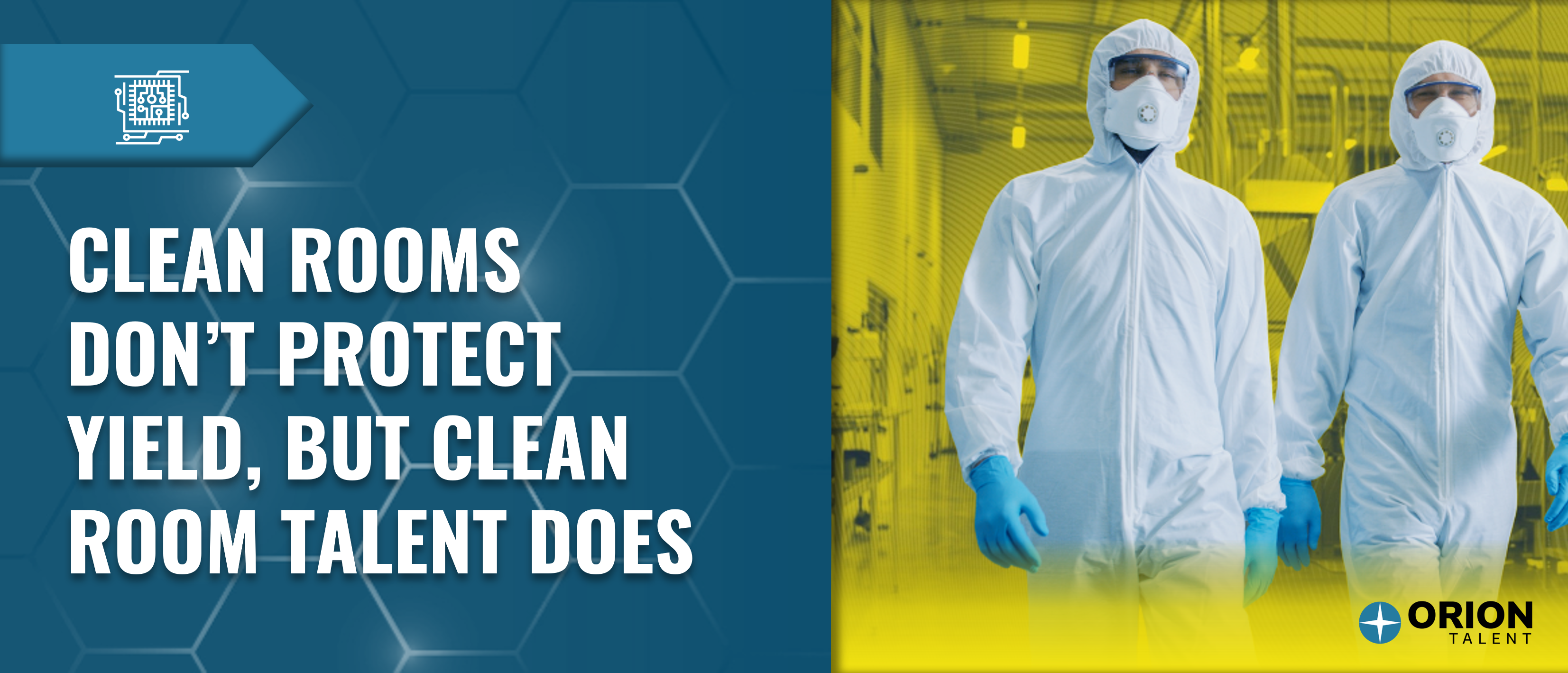
Semiconductor fabrication environments are among the most controlled manufacturing spaces in the world. Air filtration systems remove microscopic particles. Strict gowning procedures limit contamination risk. Materials move through carefully designed pathways to maintain environmental stability.
These controls are essential because even extremely small sources of contamination can affect semiconductor yield.
However, environmental engineering alone does not protect yield. The effectiveness of clean-room systems ultimately depends on the people operating within them.
In semiconductor manufacturing, disciplined execution of contamination-control procedures is a workforce capability as much as an environmental one. Documentation, protocols, and monitoring systems establish the framework for control, but consistent human execution determines whether that framework functions as intended.
Human Variability Remains a Contamination Risk
Most semiconductor organizations invest heavily in facility engineering and contamination monitoring systems. Contamination events are not always traced back to failures in equipment or facilities. In many cases, human variability plays a role.
Improper gowning procedures, rushed material handling, deviations from documented processes, or incomplete documentation can introduce contamination risk. In high-precision manufacturing environments, even small procedural deviations can affect yield outcomes.
These issues are rarely the result of negligence. More often, they reflect gaps in experience, training, or familiarity with the level of discipline required in contamination-controlled environments.
Clean-room systems reduce environmental variability, but they cannot eliminate human variability. That responsibility falls to workforce design.
Experience Alone Does Not Guarantee Discipline
Many semiconductor organizations attempt to manage contamination risk by prioritizing candidates with prior clean-room experience. While this approach may reduce some onboarding complexity, it does not necessarily guarantee the behaviors that protect yield.
Operational discipline, attention to process documentation, and careful equipment handling are not exclusive to semiconductor manufacturing. These behaviors are also essential in other high-consequence technical environments such as aviation maintenance, nuclear propulsion, advanced medical device manufacturing, and power generation systems.
Professionals from these environments often demonstrate strong procedural awareness, documentation rigor, and accountability for controlled processes. When supported by structured onboarding, these capabilities can translate effectively into semiconductor operations.
In many cases, behavioral alignment with disciplined systems matters more than prior exposure to a clean-room environment.
Process Control Depends on Workforce Behavior
Clean-room manufacturing relies on consistency. Process documentation defines how tasks must be executed to protect yield and equipment stability.
For that system to function effectively, technicians and engineers must demonstrate consistent adherence to procedures, awareness of contamination pathways, and accountability for documentation integrity. Small deviations can introduce variability that is difficult to detect until yield data reveals a problem.
Professionals who have developed strong process discipline in other controlled technical environments often adapt well to semiconductor manufacturing because their operational habits already align with these expectations.
When organizations evaluate candidates through a capability-based lens, they often discover that the behavioral characteristics required for contamination-controlled manufacturing exist in a broader range of technical populations than traditional hiring models assume.
Onboarding Reinforces Environmental Discipline
Hiring for behavioral alignment must be paired with structured onboarding.
Effective semiconductor onboarding programs reinforce contamination-control principles, establish clear documentation expectations, and provide supervised qualification periods before employees operate independently. These programs allow new hires to internalize environmental discipline while building familiarity with specific tools and processes.
When onboarding is standardized and deliberate, technically capable candidates from adjacent industries often achieve operational readiness quickly because their foundational habits around documentation, safety, and procedural compliance already exist.
Over time, this approach can strengthen operational culture as teams collectively reinforce disciplined execution.
Workforce Design Supports Yield Stability
Semiconductor leaders devote substantial resources to protecting yield. Facilities teams manage environmental conditions, engineers monitor process variability, and equipment specialists maintain system reliability.
Workforce design should receive similar attention. When hiring models emphasize procedural discipline, trainability, and operational accountability, organizations build teams whose behaviors align naturally with the demands of contamination-controlled manufacturing. This alignment reduces variability, supports consistent execution of contamination-control procedures, and ultimately protects yield stability.
Archives
- October 2026
- September 2026
- August 2026
- July 2026
- June 2026
- May 2026
- April 2026
- March 2026
- February 2026
- January 2026
- December 2025
- November 2025
- October 2025
- September 2025
- August 2025
- July 2025
- June 2025
- May 2025
- April 2025
- March 2025
- February 2025
- October 2024
- May 2024
- March 2024
- February 2024
- January 2024
- December 2023
- November 2023
- October 2023
- September 2023
- August 2023
- July 2023
- June 2023
- May 2023
- April 2023
- March 2023
- February 2023
- January 2023
 RSS Feed