For years, hiring has been treated as a functional responsibility within HR. It has been measured through activity metrics such as time to fill, cost per hire, requisition volume, and offer acceptance rates. When those numbers looked healthy, the system was assumed to be working.
That assumption no longer holds. Volatile labor markets, evolving skill demands, regional wage pressure, and changing candidate expectations have exposed a deeper issue. Hiring is not a series of transactions. It is a business performance system. And systems that are not intentionally aligned produce variability.
For CHROs, that variability surfaces in ways that directly affect the business. Accepted offers fail to materialize. Early attrition slows productivity. Managers express frustration with both quality and speed. Workforce plans look solid on paper but falter in execution. These are not isolated recruiting problems. They are signs of a system that is not operating in sync.
The issue is not effort, but orchestration.
What is Workforce Orchestration?
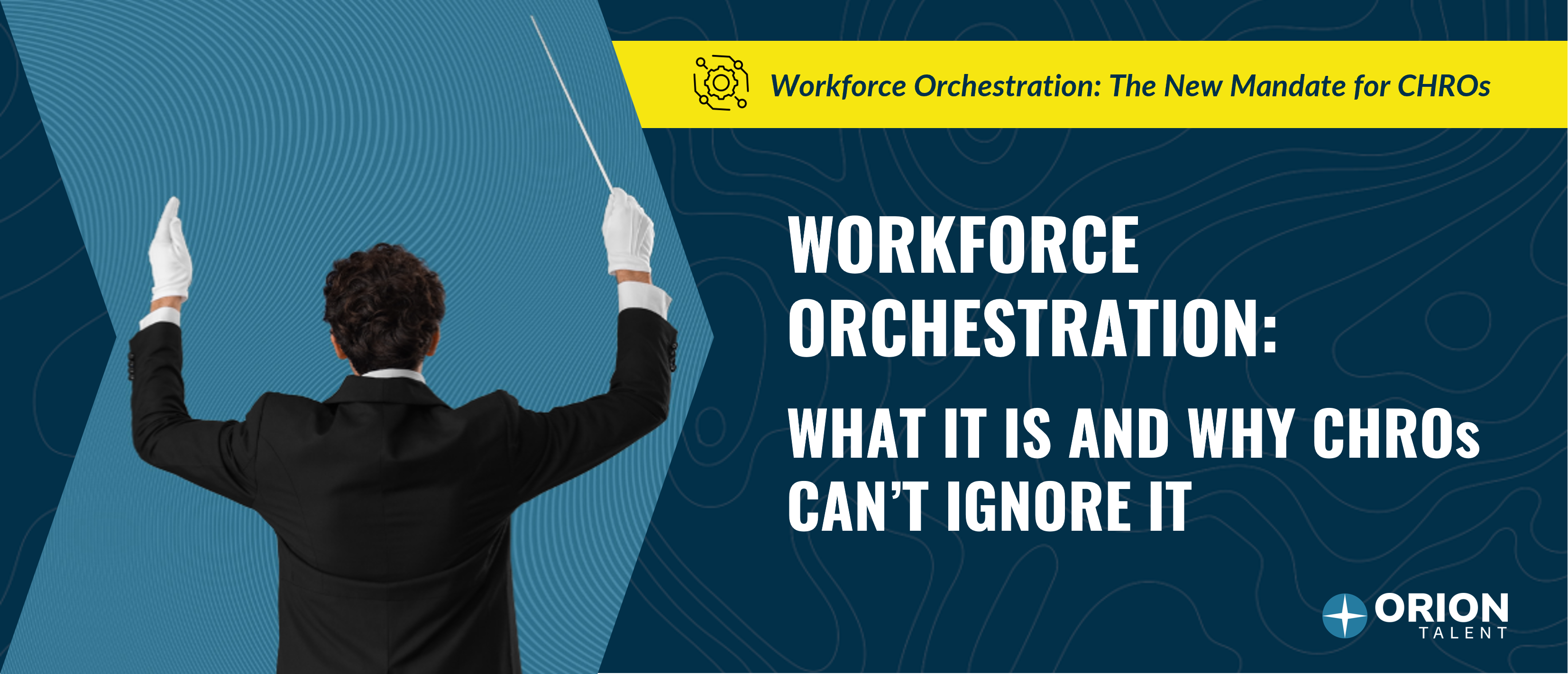
Workforce orchestration is the coordinated design and execution of the people, processes, technology, and market intelligence required to deliver predictable workforce outcomes.
It requires alignment across role design, performance measurement, hiring manager accountability, regional market context, governance, and data visibility. When these elements operate independently, hiring feels busy but inconsistent. When they operate as an integrated system, workforce performance becomes more stable and measurable.
Coordination manages activity, but Orchestration delivers outcomes.
Why the CHRO Mandate Has Shifted
Most hiring models were built for a more stable environment. They assume predictable labor supply, clear experience pathways, centralized process control, and limited variation across markets. That environment has changed.
Today’s CHRO is accountable not only for filling positions but for enabling growth, protecting margins, and reducing operational risk. Workforce performance is no longer downstream of hiring. It is directly shaped by how hiring is designed and governed.
When orchestration is absent, experience requirements narrow the talent pool unnecessarily. Managers operate with inconsistent expectations. Offer-to-start attrition increases. Regional and local market realities are overlooked. Procurement decisions prioritize cost transparency over outcome capability. The result is volatility, and volatility undermines performance.
From Recruiting Oversight to System Leadership
The new mandate of the CHRO is not to simply oversee recruiting activity. It is to design and lead a system that produces consistent workforce performance.
That shift requires different questions. Are we measuring productivity rather than just speed? Do hiring managers understand their role in execution? Are we adapting to regional labor dynamics? Are our partners equipped to manage complexity? Do we have the visibility to anticipate risk before it affects operations?
Organizations that move from functional coordination to intentional orchestration gain something increasingly rare in today’s labor market: predictability.
Workforce Orchestration: The New Mandate for CHROs
In the posts that follow, we will examine where orchestration most often breaks down and how leading CHROs are redesigning their hiring systems to restore alignment, accountability, and performance. Because the effectiveness of today’s CHROs will not be based on activity, but by measurable business impact.
Archives
- October 2026
- September 2026
- August 2026
- July 2026
- June 2026
- May 2026
- April 2026
- March 2026
- February 2026
- January 2026
- December 2025
- November 2025
- October 2025
- September 2025
- August 2025
- July 2025
- June 2025
- May 2025
- April 2025
- March 2025
- February 2025
- October 2024
- May 2024
- March 2024
- February 2024
- January 2024
- December 2023
- November 2023
- October 2023
- September 2023
- August 2023
- July 2023
- June 2023
- May 2023
- April 2023
- March 2023
- February 2023
- January 2023
 RSS Feed