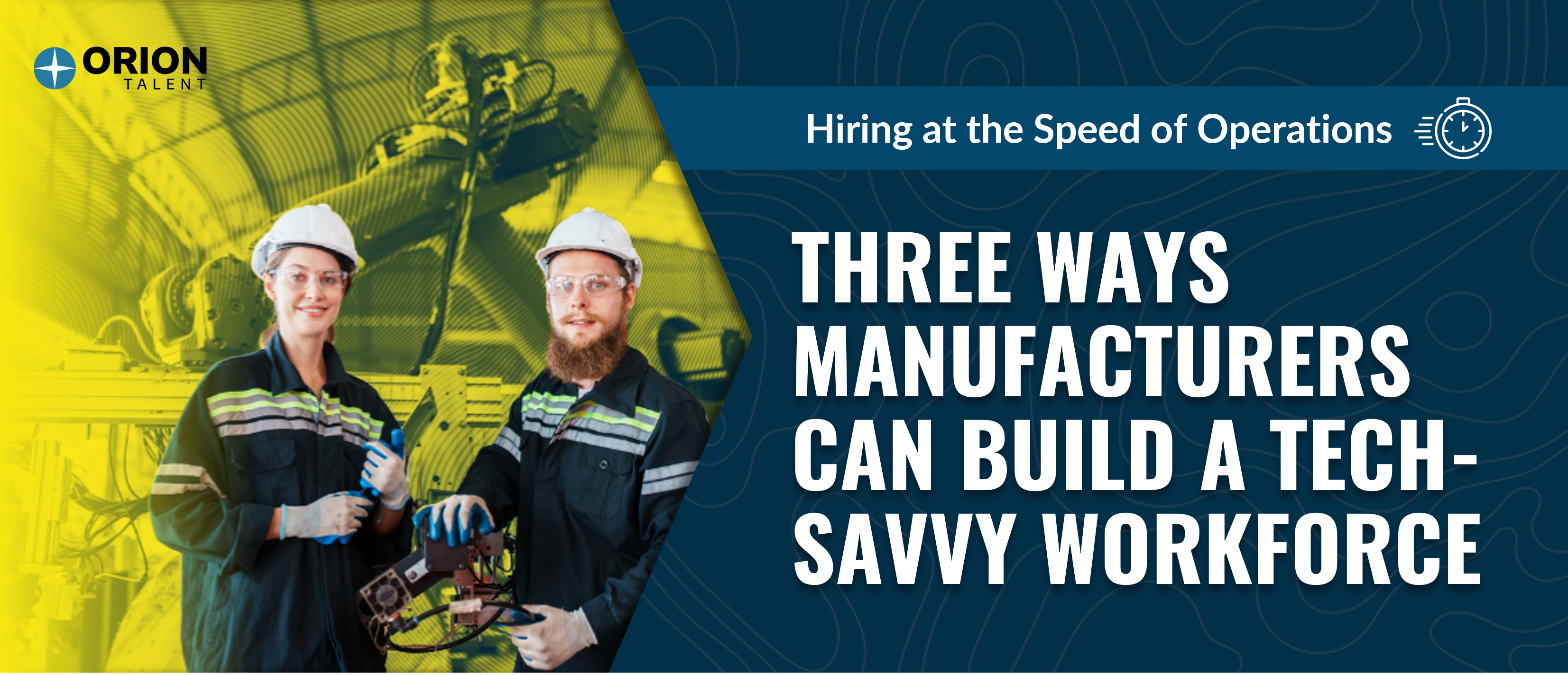
Manufacturers across the United States are making significant investments in automation, advanced technologies, and digital transformation. At the same time, many continue to face one of their greatest operational challenges: finding and developing the skilled workforce needed to support that growth.
As Orion Talent CEO Greg Summers recently shared in his SupplyChainBrain article, "How to Boost the Numbers of Tech-Savvy U.S. Manufacturing Workers," the solution extends far beyond filling today's open positions. Manufacturers must build sustainable talent pipelines that prepare employees for increasingly technology-enabled careers.
So what does that look like in practice? Here are three ways manufacturers can strengthen their workforce for the future.
1. Expand the Definition of Qualified Talent
As manufacturing evolves, so do the skills required to succeed.
Modern manufacturing environments rely on automation, robotics, AI, connected equipment, and digital systems that require employees to think critically, solve problems, and continuously adapt. While technical experience remains important, employers should also prioritize learning agility, curiosity, and the ability to develop new skills over time.
Hiring managers who focus exclusively on candidates with identical backgrounds or direct industry experience often overlook individuals who have the aptitude to succeed with the right training. Broadening hiring criteria can significantly expand the available talent pool while helping organizations build a more resilient workforce.
2. Invest in Workforce Development, Not Just Recruitment
Recruiting alone cannot solve the long-term manufacturing talent shortage.
As Greg discusses in his SupplyChainBrain article, manufacturers have an opportunity to engage earlier in the talent pipeline by partnering with schools, apprenticeship programs, workforce organizations, and community partners. These relationships help build awareness of modern manufacturing careers while ensuring training aligns with the skills employers actually need.
Workforce development also extends beyond new hires. Organizations that invest in continuous learning, upskilling, and career development create stronger internal talent pipelines while improving employee engagement and retention.
The manufacturers that view talent development as a strategic investment, rather than simply an HR initiative, will be better positioned to meet future workforce demands.
3. Use Technology to Accelerate Human Potential
Artificial intelligence continues to reshape nearly every industry, including manufacturing. Rather than replacing skilled workers, AI has the potential to help employees become productive more quickly and continue developing throughout their careers.
AI-powered training, digital work instructions, knowledge management tools, and intelligent onboarding can shorten learning curves while making valuable institutional knowledge more accessible to new employees.
Technology should complement human expertise, not replace it. Critical thinking, collaboration, technical judgment, and problem-solving remain essential capabilities in modern manufacturing. Organizations that combine emerging technologies with intentional workforce development will create a stronger competitive advantage than those focusing on technology alone.
Looking Ahead
Building a tech-savvy manufacturing workforce is not a short-term hiring initiative. It is a long-term workforce strategy.
Manufacturers that broaden their approach to recruiting, invest in developing talent, and thoughtfully integrate technology into learning and development will be better prepared to meet the demands of an increasingly digital manufacturing environment.
For a deeper perspective on this topic, read Greg Summers' recent SupplyChainBrain article, "How to Boost the Numbers of Tech-Savvy U.S. Manufacturing Workers." His article explores why modern manufacturing requires a new approach to attracting, developing, and retaining the workforce of the future.
Archives
- September 2026
- August 2026
- July 2026
- June 2026
- May 2026
- April 2026
- March 2026
- February 2026
- January 2026
- December 2025
- November 2025
- October 2025
- September 2025
- August 2025
- July 2025
- June 2025
- May 2025
- April 2025
- March 2025
- February 2025
- October 2024
- May 2024
- March 2024
- February 2024
- January 2024
- December 2023
- November 2023
- October 2023
- September 2023
- August 2023
- July 2023
- June 2023
- May 2023
- April 2023
- March 2023
- February 2023
- January 2023
 RSS Feed