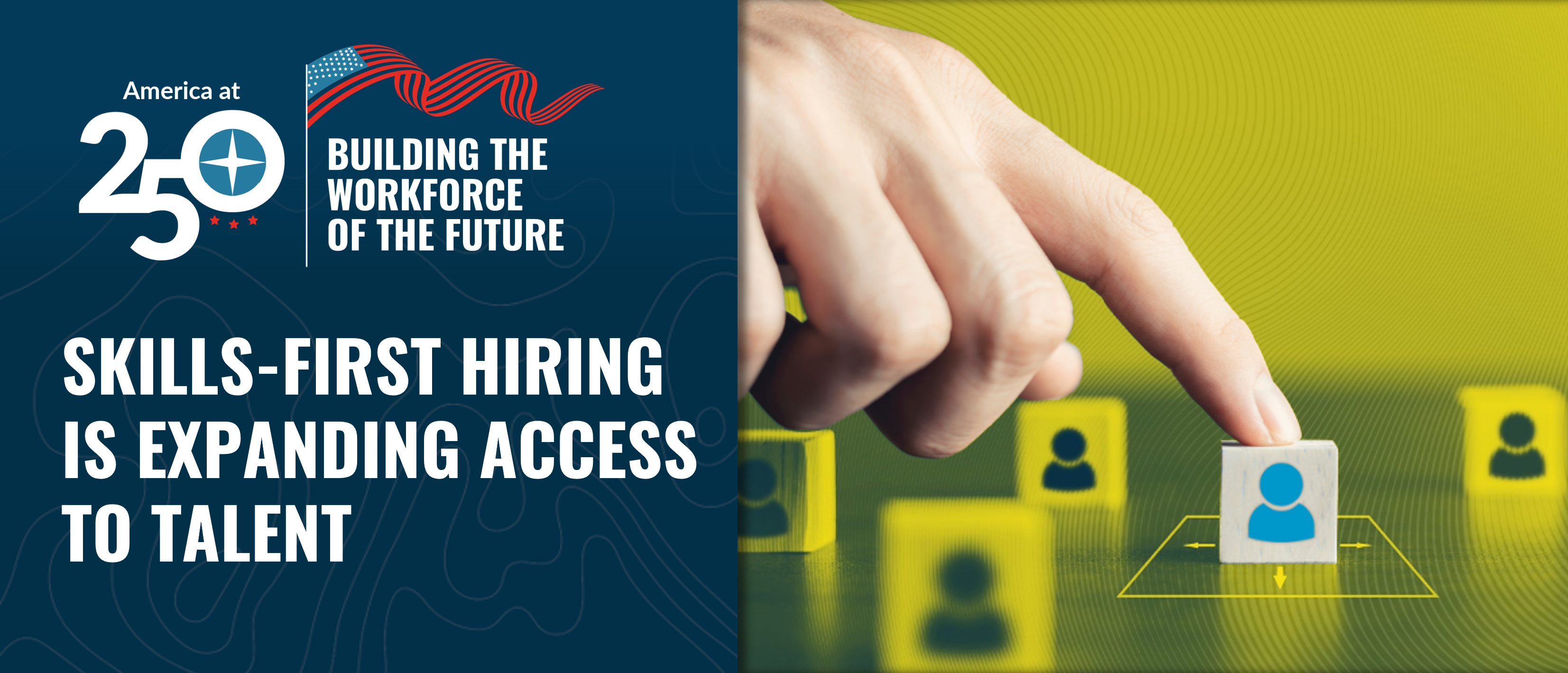
As America approaches its 250th anniversary, workforce readiness remains one of the most important factors influencing the nation's economic growth, competitiveness, and long-term success. Yet employers across industries continue to face challenges attracting and retaining the skilled talent needed to support evolving business needs.
In response, many organizations are reevaluating how they define qualified talent and expanding their focus beyond traditional credentials and career paths. One approach gaining increased attention is skills-first hiring.
Rather than emphasizing degrees, job titles, or industry-specific experience as primary qualifications, skills-first hiring focuses on the capabilities required to perform a role successfully. While not a new concept, it has become an increasingly important workforce strategy as employers seek new ways to broaden access to talent.
Why Traditional Hiring Models Are Being Reevaluated
The workforce landscape has changed significantly in recent years.
Many industries are experiencing the combined effects of workforce retirements, evolving technology requirements, changing employee expectations, and increased competition for experienced talent. At the same time, employers are navigating labor shortages in a wide range of occupations, from skilled trades and technicians to supervisors, engineers, and operations professionals.
These challenges have prompted many organizations to reconsider whether traditional hiring requirements alone are sufficient to meet future workforce needs.
Employers are increasingly asking whether there may be qualified candidates who possess the necessary capabilities but developed those skills through different educational, professional, or military experiences.
The Growing Focus on Skills
Skills-first hiring recognizes that valuable capabilities can be developed through many different pathways.
Technical education programs, apprenticeships, military service, skilled trades, community colleges, on-the-job experience, and adjacent industries all provide opportunities to develop skills that may transfer successfully into new roles.
Leadership, problem solving, adaptability, communication, mechanical aptitude, and technical proficiency are often developed in a variety of settings. While the context may differ, many of these capabilities remain relevant across industries and occupations.
As a result, employers are placing greater emphasis on identifying the skills required for success rather than relying exclusively on traditional indicators of qualification.
Expanding Access to Talent
One of the primary benefits of a skills-first approach is the ability to broaden access to talent.
When organizations focus on skills and capabilities, they may uncover qualified candidates from backgrounds that would otherwise be overlooked. This can include individuals transitioning from military service, candidates from adjacent industries, graduates of technical education programs, or workers seeking to apply their skills in new environments.
For employers facing workforce constraints, expanding the pool of potential candidates can create new opportunities to address hiring challenges while strengthening workforce resilience.
Equally important, skills-first hiring can help create additional pathways to opportunity for individuals whose qualifications may not align perfectly with traditional hiring criteria but whose capabilities align closely with the needs of employers.
What This Means for Employers
As workforce needs continue to evolve, organizations may benefit from examining how job requirements, screening practices, and career pathways influence access to talent.
This does not mean lowering standards or disregarding experience. Rather, it means identifying which qualifications are truly essential and where flexibility may help expand access to capable candidates.
Many employers are also investing in training, development, apprenticeships, and other workforce programs that help individuals build upon existing skills and prepare for new opportunities.
These efforts can help create stronger talent pipelines while supporting long-term workforce development goals.
Looking Ahead
The workforce challenges facing employers are complex and unlikely to be solved through any single strategy. However, skills-first hiring represents one example of how organizations are adapting to a changing labor market and expanding access to talent.
As America prepares for the future, workforce readiness will depend not only on developing new talent, but also on recognizing talent in new ways. By focusing on skills, capabilities, and potential, employers can help create more pathways to opportunity while strengthening the workforce needed for the years ahead.
In our next article, we'll explore how creating meaningful career opportunities for veterans and military spouses strengthens communities, supports economic mobility, and contributes to a stronger workforce for the future.
Archives
- October 2026
- September 2026
- August 2026
- July 2026
- June 2026
- May 2026
- April 2026
- March 2026
- February 2026
- January 2026
- December 2025
- November 2025
- October 2025
- September 2025
- August 2025
- July 2025
- June 2025
- May 2025
- April 2025
- March 2025
- February 2025
- October 2024
- May 2024
- March 2024
- February 2024
- January 2024
- December 2023
- November 2023
- October 2023
- September 2023
- August 2023
- July 2023
- June 2023
- May 2023
- April 2023
- March 2023
- February 2023
- January 2023
 RSS Feed