As Americans gather to celebrate Independence Day this weekend, many will take time to reflect on the values that have shaped the nation for nearly 250 years: service, sacrifice, opportunity, and the pursuit of a better future.
These themes are often discussed in the context of our history. They are equally relevant to our future.
As America approaches its 250th anniversary, one of the most important questions facing employers, educators, policymakers, and workforce leaders is how we create opportunities that allow individuals, families, and communities to thrive.
Service Continues Beyond the Uniform
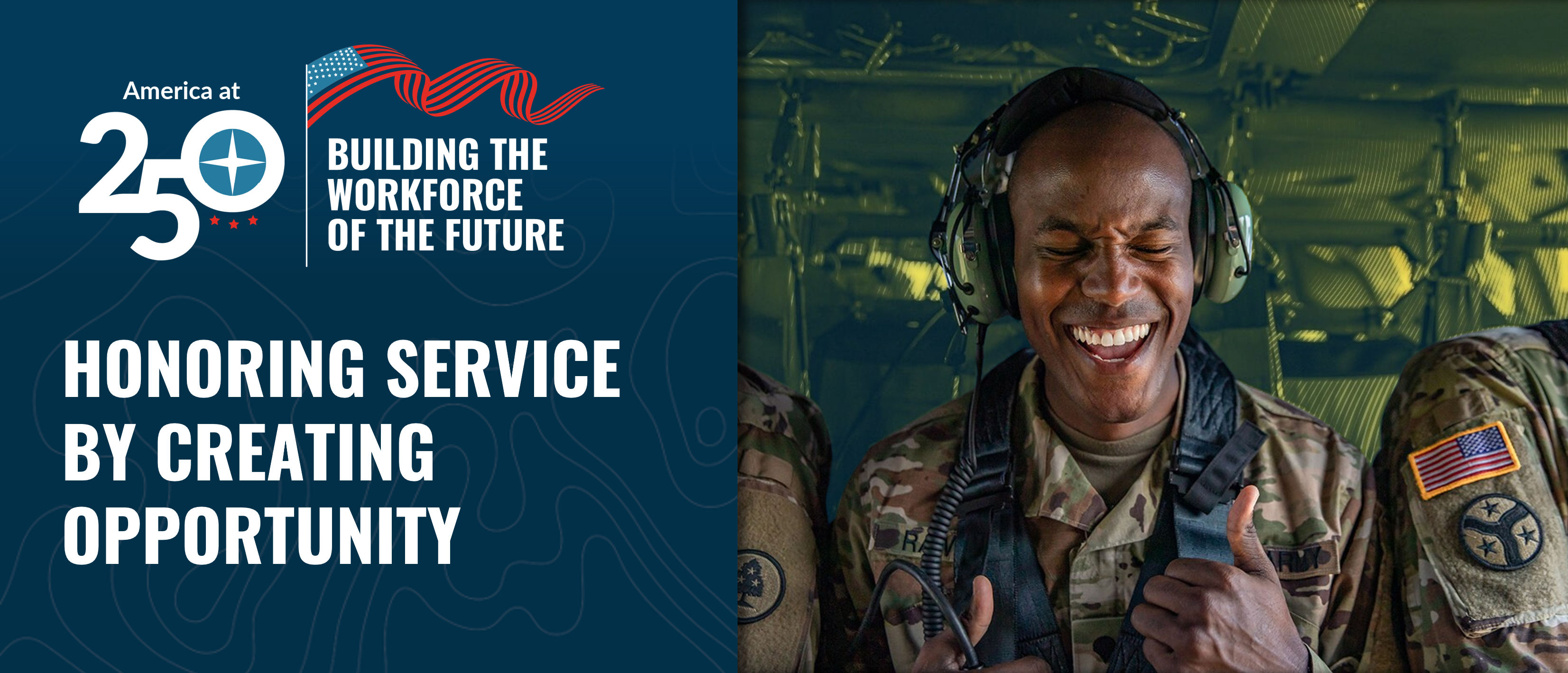
Military service represents one of the clearest examples of commitment to something larger than oneself. Every year, thousands of service members transition from military careers into civilian communities, bringing leadership experience, technical skills, adaptability, and a strong sense of purpose.
Yet the end of military service is not the end of service.
Veterans continue to contribute as employees, leaders, business owners, mentors, volunteers, and community members. Military spouses also play a vital role in supporting families, workplaces, schools, and local economies across the country.
Helping military-connected individuals successfully navigate the next chapter of their careers benefits not only those individuals and families, but also the organizations and communities they serve.
Opportunity Strengthens Communities
Throughout this series, we have explored the workforce challenges facing military communities, national security industries, and critical sectors across the economy.
While these discussions often focus on talent shortages and workforce needs, they are ultimately about people.
Workforce development is not simply about filling positions. It is about creating pathways that allow individuals to build skills, pursue meaningful careers, increase economic mobility, and contribute to their communities.
When people have access to opportunity, the benefits extend far beyond the workplace. Families become more financially secure. Communities become stronger. Employers gain access to skilled talent. Local economies grow.
Employers Have an Important Role to Play
Employers are uniquely positioned to help expand access to opportunity.
By investing in training, development, skills-based hiring practices, apprenticeship programs, and career pathways, organizations can help individuals build successful careers while addressing workforce challenges of their own.
This is especially important for military-connected talent, whose skills and experiences may not always fit neatly within traditional hiring models.
Organizations that focus on potential as well as experience often discover highly capable individuals ready to contribute, grow, and lead.
Building the Workforce for the Future
Throughout this series, we have explored workforce innovation, military communities, national security industries, critical workforce challenges, and the growing importance of skills-based hiring.
While each topic offers a different perspective, they all point to the same conclusion: building the workforce of the future begins with expanding access to opportunity.
Employers, educators, workforce organizations, policymakers, and communities all have a role to play in creating pathways that help individuals develop skills, pursue meaningful careers, and contribute to long-term economic growth.
As America approaches its 250th anniversary, the conversation about workforce readiness is ultimately a conversation about people. The strength of our workforce, our industries, and our communities will depend on our ability to recognize potential, invest in talent, and create opportunities for future generations.
Archives
- October 2026
- September 2026
- August 2026
- July 2026
- June 2026
- May 2026
- April 2026
- March 2026
- February 2026
- January 2026
- December 2025
- November 2025
- October 2025
- September 2025
- August 2025
- July 2025
- June 2025
- May 2025
- April 2025
- March 2025
- February 2025
- October 2024
- May 2024
- March 2024
- February 2024
- January 2024
- December 2023
- November 2023
- October 2023
- September 2023
- August 2023
- July 2023
- June 2023
- May 2023
- April 2023
- March 2023
- February 2023
- January 2023
 RSS Feed