Written by Laura Schmiegel, SVP, Strategic Partnerships
As America approaches its 250th anniversary, the strength of our national security depends on more than military readiness. It also depends on the workforce that supports critical industries, including manufacturing, shipbuilding, energy, defense, and other sectors that power our economy and national defense.
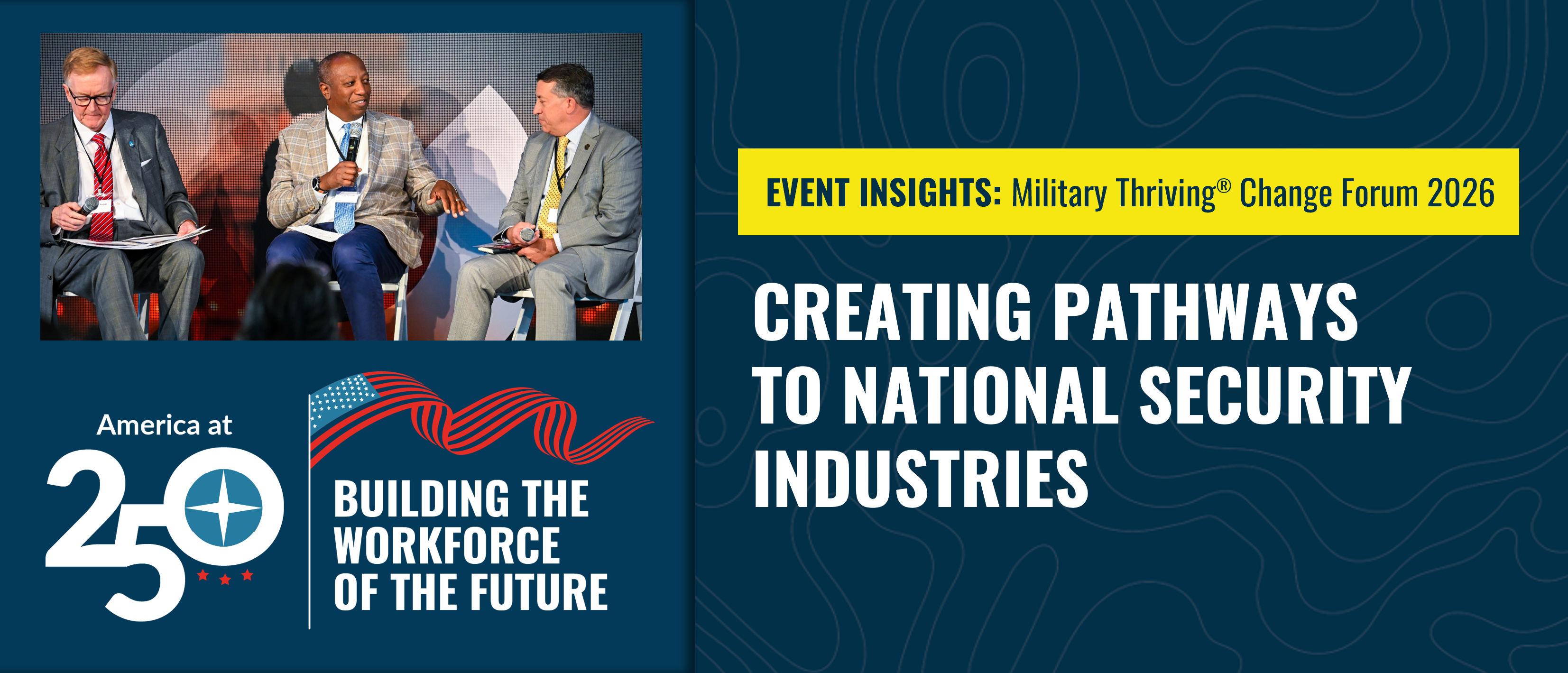
During the Military Thriving® Change Forum 2026 at Georgetown University, Orion Talent CEO Greg Summers joined Admiral James Foggo (Ret.) and MOAA President Lt. Gen. Brian T. Kelly, USAF (Ret.) for a panel discussion titled Creating Pathways to National Security Industries: Workforce Challenges, Skills Gaps, and the Critical Role of Veteran-Owned Small Businesses.
While the conversation covered a range of topics, several key themes emerged regarding the workforce challenges facing critical industries and the role military-connected talent can play in helping address them.
1. National Security Industries Are Facing a Leadership Cliff
One challenge discussed throughout the panel was the growing gap created by the departure of experienced leaders and skilled professionals across manufacturing and other critical industries.
As longtime employees retire, organizations are working to replace not only technical expertise but also decades of institutional knowledge and leadership experience. At the same time, many employers continue to face elevated turnover among newer employees, creating additional pressure on workforce development efforts.
The result is a widening talent gap that affects productivity, succession planning, and long-term workforce stability.
For industries that support national security, the challenge extends beyond filling open positions. It is about ensuring a sustainable pipeline of skilled workers and future leaders.
2. Military Talent Brings More Than Technical Skills
The panel also explored how military-connected talent can help address these workforce challenges.
Veterans often enter the civilian workforce with leadership experience, accountability, adaptability, and experience operating in complex environments. Many also possess foundational mechanical and technical skills that can accelerate their path into skilled civilian careers.
Greg noted that younger veterans are increasingly focused on career growth opportunities. In Orion Talent's military survey research, career path visibility consistently ranks among the highest priorities for transitioning service members evaluating civilian employers.
Organizations that combine structured training, clear advancement opportunities, and transparent compensation can create reliable talent pipelines while providing military-connected talent with the growth opportunities they seek.
3. Misperceptions Continue to Create Unnecessary Barriers
A recurring theme throughout both the panel discussion and the broader forum was the impact of perception gaps.
Military-connected talent may not always be aware of the opportunities available within industries such as advanced manufacturing, shipbuilding, defense, and energy. Likewise, employers often underestimate how transferable military skills can be to civilian roles.
Many hiring managers focus on direct experience with specific equipment, certifications, or processes while overlooking the broader technical aptitude, leadership capability, and learning agility veterans bring to the workforce.
These misunderstandings can create unnecessary barriers between qualified candidates and organizations with urgent workforce needs.
Closing those gaps requires better communication, stronger education efforts, and a greater emphasis on skills and potential rather than perfect alignment with a job description.
4. Employers Should Focus on Potential, Not Perfect Alignment
One of the clearest takeaways from the discussion was that military talent may be closer to job readiness than many organizations assume.
Veterans often arrive with a strong foundation of discipline, leadership, mechanical aptitude, technical skills, and problem-solving capabilities. Rather than viewing military candidates through the lens of what they have not yet done, employers should focus on how quickly they can build upon the capabilities those individuals already possess.
In many cases, targeted training and onboarding can close perceived skill gaps far faster than organizations expect.
For employers facing workforce shortages, this shift in mindset can significantly expand access to qualified talent while reducing the time required to develop productive employees and future leaders.
Looking Ahead
One message resonated throughout the discussion: national security industries cannot afford to wait for future talent pipelines to solve today's workforce challenges.
Investments in education, workforce development, and career awareness remain essential. However, employers also have access to a highly capable talent pool right now.
Veterans and transitioning service members bring leadership, technical aptitude, adaptability, and a commitment to mission that align closely with the needs of critical industries. By creating clearer pathways into these careers and focusing on potential as much as direct experience, employers can strengthen both their workforce and the industries that help power America's future.
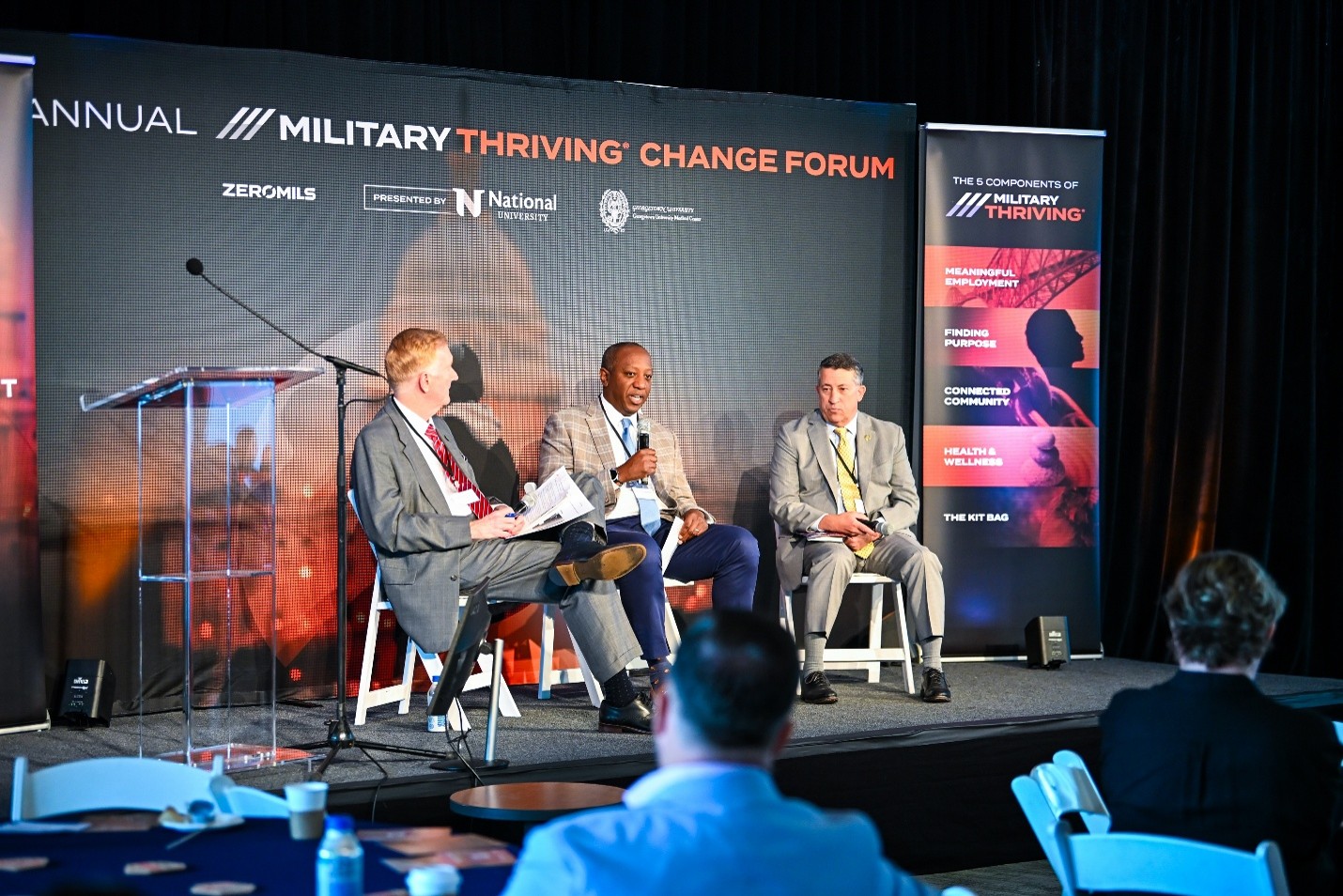
Left to Right: Admiral James Foggo (Ret.), Greg Summers, CEO of Orion Talent, and MOAA President Lt. Gen. Brian T. Kelly, USAF (Ret.)
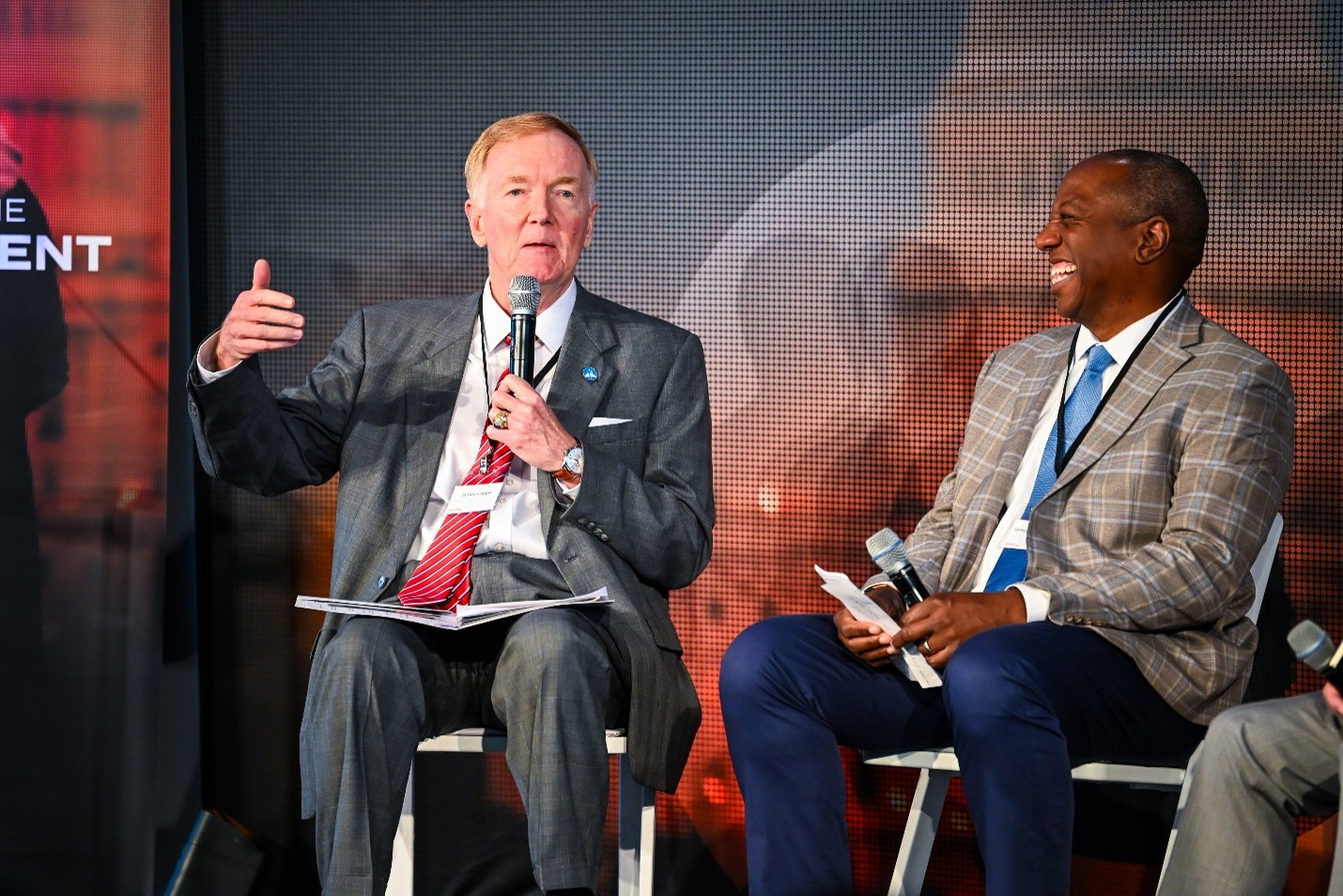
Admiral James Foggo (Ret.) and Greg Summers, CEO of Orion Talent
Archives
- October 2026
- September 2026
- August 2026
- July 2026
- June 2026
- May 2026
- April 2026
- March 2026
- February 2026
- January 2026
- December 2025
- November 2025
- October 2025
- September 2025
- August 2025
- July 2025
- June 2025
- May 2025
- April 2025
- March 2025
- February 2025
- October 2024
- May 2024
- March 2024
- February 2024
- January 2024
- December 2023
- November 2023
- October 2023
- September 2023
- August 2023
- July 2023
- June 2023
- May 2023
- April 2023
- March 2023
- February 2023
- January 2023
 RSS Feed