Written by Laura Schmiegel, SVP, Strategic Partnerships
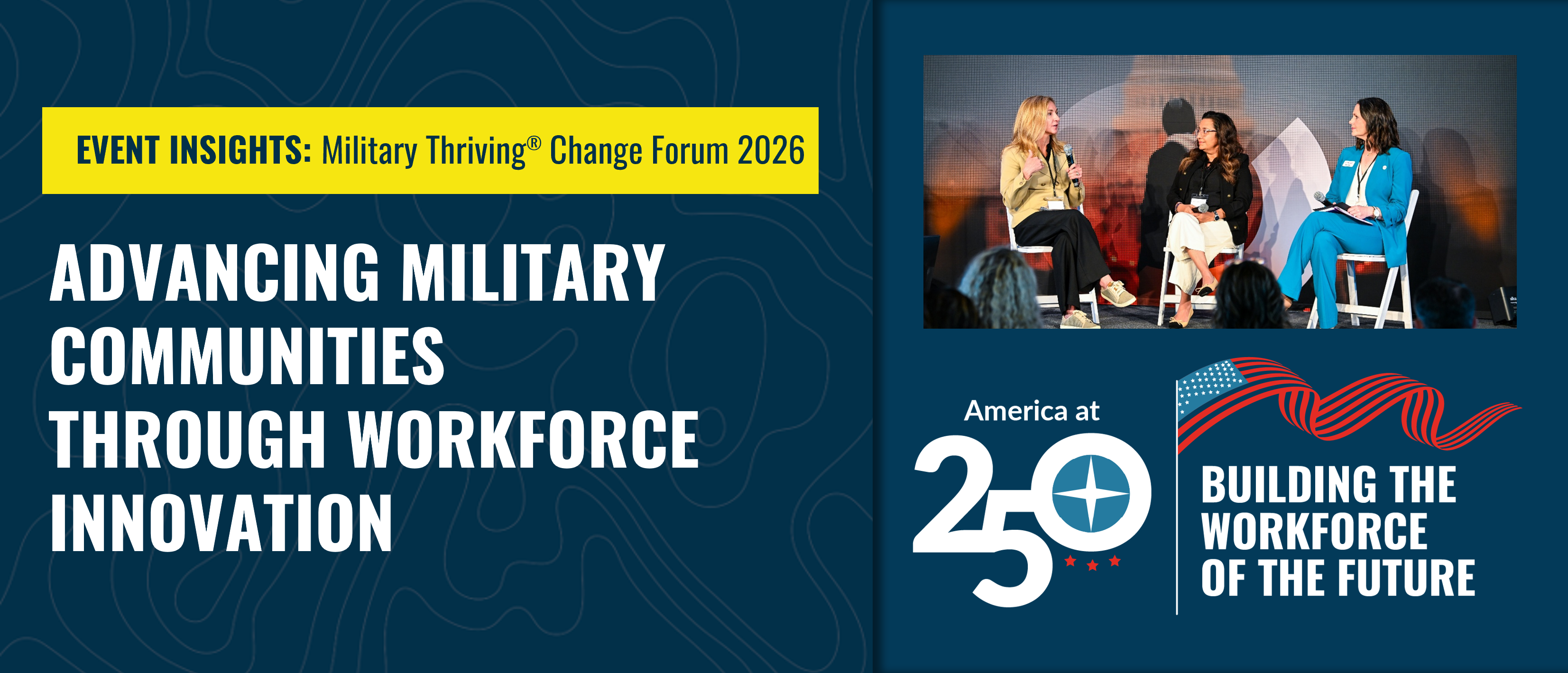
As America approaches its 250th anniversary, conversations about workforce development, talent pipelines, and economic competitiveness are becoming increasingly important. At the Military Thriving® Change Forum 2026, leaders from government, higher education, industry, and the military community gathered at Georgetown University to discuss the opportunities and challenges facing military-connected communities and the workforce of the future.
While the discussions covered a wide range of topics, several themes emerged consistently throughout the event. For employers struggling to fill skilled positions and build sustainable talent pipelines, these insights offer important considerations for the future.
Closing the Perception Gap Around Military Talent
One of the most frequently discussed challenges was the disconnect between the skills military talent possesses and how those skills are perceived by employers.
Many organizations continue to evaluate military candidates based on direct experience with specific certifications, equipment, or processes. While these requirements may seem reasonable, they can create an exaggerated perception of the gap between military experience and civilian job requirements.
In reality, veterans often possess highly relevant technical skills, leadership experience, problem-solving capabilities, and the ability to learn and adapt quickly. The challenge is not necessarily a lack of capability, but rather a lack of understanding about how military experience translates into civilian workforce needs.
Closing this perception gap remains one of the most significant opportunities for employers seeking to expand their talent pipelines.
Expanding Awareness of Career Pathways
Another recurring theme was the need for greater awareness of career opportunities outside of traditional four-year degree pathways.
As industries such as advanced manufacturing, shipbuilding, energy, and defense continue to face workforce shortages, many employers are competing for talent in increasingly constrained labor markets. Yet awareness of these opportunities often remains limited among students, transitioning service members, and even workforce development stakeholders.
The discussion highlighted the importance of better educating military-connected talent about careers that offer strong earning potential, technical growth, and long-term advancement opportunities.
Advanced manufacturing was frequently cited as an example. Despite significant technological advancements, some job seekers continue to associate manufacturing with outdated perceptions of the industry rather than the clean, highly technical, and increasingly sophisticated environments that characterize many facilities today.
Strengthening Alignment Between Military Training and Industry Needs
Participants also emphasized the importance of closer collaboration between military training programs and civilian workforce requirements.
Military service provides extensive technical and occupational training, but stronger alignment between military education and post-service employment opportunities could help accelerate workforce transitions and improve career outcomes.
Employers, educators, policymakers, and workforce organizations all have a role to play in creating clearer pathways between military occupations and civilian careers. By improving communication and collaboration, stakeholders can help ensure that service members leave the military better positioned to pursue in-demand skilled careers.
Creating Opportunity Through the Skilled Trades
Throughout the forum, speakers highlighted the role skilled trades can play in creating economic mobility and long-term career success.
Particularly compelling were discussions around veterans leveraging skilled trades experience as a pathway to entrepreneurship, franchise ownership, and business growth. These opportunities not only provide access to stable, well-paying careers but also create avenues for wealth creation and long-term financial independence.
As employers and workforce leaders consider solutions to ongoing labor shortages, the skilled trades represent an important part of the conversation.
A Workforce Opportunity Available Today
Perhaps the most important takeaway for employers is that while long-term workforce development efforts continue to gain momentum, there is already a highly capable talent pool available today.
National initiatives focused on strengthening K-12 career pathways, expanding workforce education, and increasing awareness of skilled careers are critical investments for the future. However, military-connected talent offers organizations an opportunity to address workforce needs now.
Veterans and transitioning service members bring technical skills, leadership experience, adaptability, and a commitment to mission success that align well with many of today's most pressing workforce challenges.
For organizations seeking to strengthen their workforce, military talent is not simply part of a future solution. It is an opportunity available today.
Looking Ahead
The Military Thriving® Change Forum reinforced the importance of collaboration among employers, educators, policymakers, and workforce organizations. Building stronger military communities and a stronger workforce requires more than hiring alone. It requires creating pathways to opportunity, expanding awareness of career options, and helping military-connected talent translate their skills into meaningful civilian careers.
As workforce shortages continue to impact critical industries across the country, these conversations will become increasingly important in shaping the workforce America needs for the future.
Archives
- October 2026
- September 2026
- August 2026
- July 2026
- June 2026
- May 2026
- April 2026
- March 2026
- February 2026
- January 2026
- December 2025
- November 2025
- October 2025
- September 2025
- August 2025
- July 2025
- June 2025
- May 2025
- April 2025
- March 2025
- February 2025
- October 2024
- May 2024
- March 2024
- February 2024
- January 2024
- December 2023
- November 2023
- October 2023
- September 2023
- August 2023
- July 2023
- June 2023
- May 2023
- April 2023
- March 2023
- February 2023
- January 2023
 RSS Feed