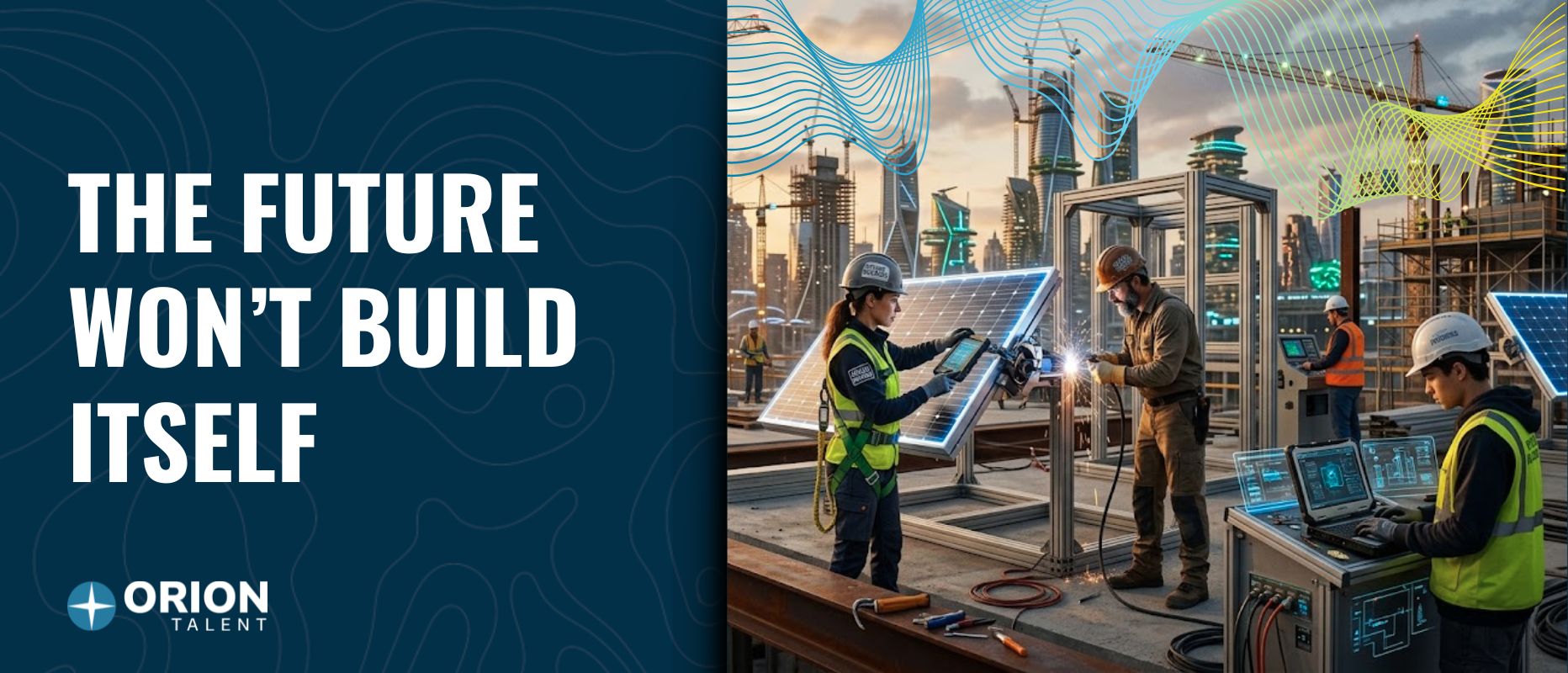
America is building the industries that will define its future. Semiconductor manufacturing facilities are expanding domestic production. Data centers are powering the rapid growth of artificial intelligence. Advanced manufacturing operations are adopting new technologies to increase productivity, efficiency, and competitiveness.
These investments represent extraordinary opportunities for innovation and economic growth. But behind every new facility, production line, and technological breakthrough is a fundamental requirement that can't be overlooked: a skilled workforce capable of making it all happen.
As industries evolve and workforce demands accelerate, employers face an increasingly important question: Where will they find the talent to build, operate, and sustain the infrastructure of tomorrow?
For many organizations, part of the answer may already exist within an often-underutilized talent pool: America's military community.
The Workforce Challenge Behind America's Next Generation of Industry
The growth of advanced manufacturing, semiconductor production, and digital infrastructure is creating demand for workers with specialized technical capabilities, operational experience, and the ability to perform in complex environments.
While each industry faces distinct challenges, their workforce requirements have important similarities.
-
Advanced Manufacturing: As facilities integrate automation, robotics, and increasingly sophisticated production technologies, employers need technicians, maintenance specialists, operations leaders, and professionals who can troubleshoot complex systems while maintaining productivity and quality.
-
Semiconductor Manufacturing: Expanding domestic chip production requires talent across equipment maintenance, manufacturing operations, facilities management, and technical support. Success depends on precision, consistency, and the ability to work within highly controlled environments.
-
Digital Infrastructure: The expansion of data centers and AI infrastructure is driving demand for critical facilities technicians, electrical and mechanical specialists, infrastructure operations professionals, and leaders who understand the importance of reliability and uptime.
Across these industries, employers aren't simply competing for workers. They're competing for individuals with the technical aptitude, problem-solving abilities, and operational discipline required to support increasingly complex operations.
And traditional recruiting approaches may not always be enough to reach them.
Military Talent: Skills Built for Mission-Critical Environments
Every year, service members transition from military service into the civilian workforce, bringing a combination of technical training, practical experience, and leadership capabilities that can translate across industries.
Consider the environments in which many military professionals develop their skills. They maintain sophisticated aircraft, vehicles, and equipment. They operate and troubleshoot electrical, mechanical, and electronic systems. They manage logistics and supply chains. They lead teams, follow rigorous safety procedures, and make decisions in situations where operational reliability matters.
Not every military occupation translates directly into a civilian role, and some positions require additional industry-specific training or certifications. But employers who look beyond traditional job titles and recognize transferable skills can broaden their access to capable talent.
Military candidates also bring attributes that extend beyond technical proficiency: adaptability, accountability, teamwork, and experience operating within structured, high-performance environments.
For employers building the workforce of the future, these capabilities deserve serious consideration.
Recognizing the Opportunity Is Only the Beginning
Understanding the value of military talent is an important first step. Successfully connecting with that talent requires a deliberate approach.
Military professionals don't always describe their experience using the same terminology employers use in civilian job postings. Their skills may be highly relevant, but their resumes, occupational specialties, and career paths can look different from those of traditional applicants.
At the same time, transitioning service members and veterans may not be familiar with the full range of opportunities available across industries like semiconductor manufacturing, advanced manufacturing, and digital infrastructure.
This creates a potential disconnect: employers need skilled talent, military candidates possess valuable capabilities, but the two don't always connect.
Closing that gap requires more than posting open positions and hoping the right candidates apply.
Employers can benefit from identifying military occupations that align with their workforce needs, communicating opportunities in ways that resonate with military candidates, and expanding their recruiting reach into military-connected talent communities.
Importantly, these efforts don't have to replace existing talent acquisition strategies. They can complement established recruiting channels and help organizations access candidates they might otherwise miss.
Building Tomorrow's Workforce Starts Today
The future of American industry depends on more than investments in facilities, equipment, and technology. It depends on the people who will operate those systems, solve complex problems, and keep critical operations running.
As employers prepare for the workforce demands ahead, military talent represents a valuable opportunity to expand their recruiting pipelines with individuals whose skills and experiences may align with some of their most pressing needs.
The organizations that succeed won't necessarily be those competing hardest for the same familiar talent pools. They'll be the ones thinking more broadly about where talent comes from, how skills translate, and how to build meaningful connections with new candidate communities.
The future won't build itself. But America's military talent can help build it.
Ready to expand your access to military talent? Discover how Orion Talent helps employers connect with military-experienced professionals and build stronger talent pipelines.
Archives
- November 2026
- October 2026
- September 2026
- August 2026
- July 2026
- June 2026
- May 2026
- April 2026
- March 2026
- February 2026
- January 2026
- December 2025
- November 2025
- October 2025
- September 2025
- August 2025
- July 2025
- June 2025
- May 2025
- April 2025
- March 2025
- February 2025
- October 2024
- May 2024
- March 2024
- February 2024
- January 2024
- December 2023
- November 2023
- October 2023
- September 2023
- August 2023
- July 2023
- June 2023
- May 2023
- April 2023
- March 2023
- February 2023
- January 2023
 RSS Feed