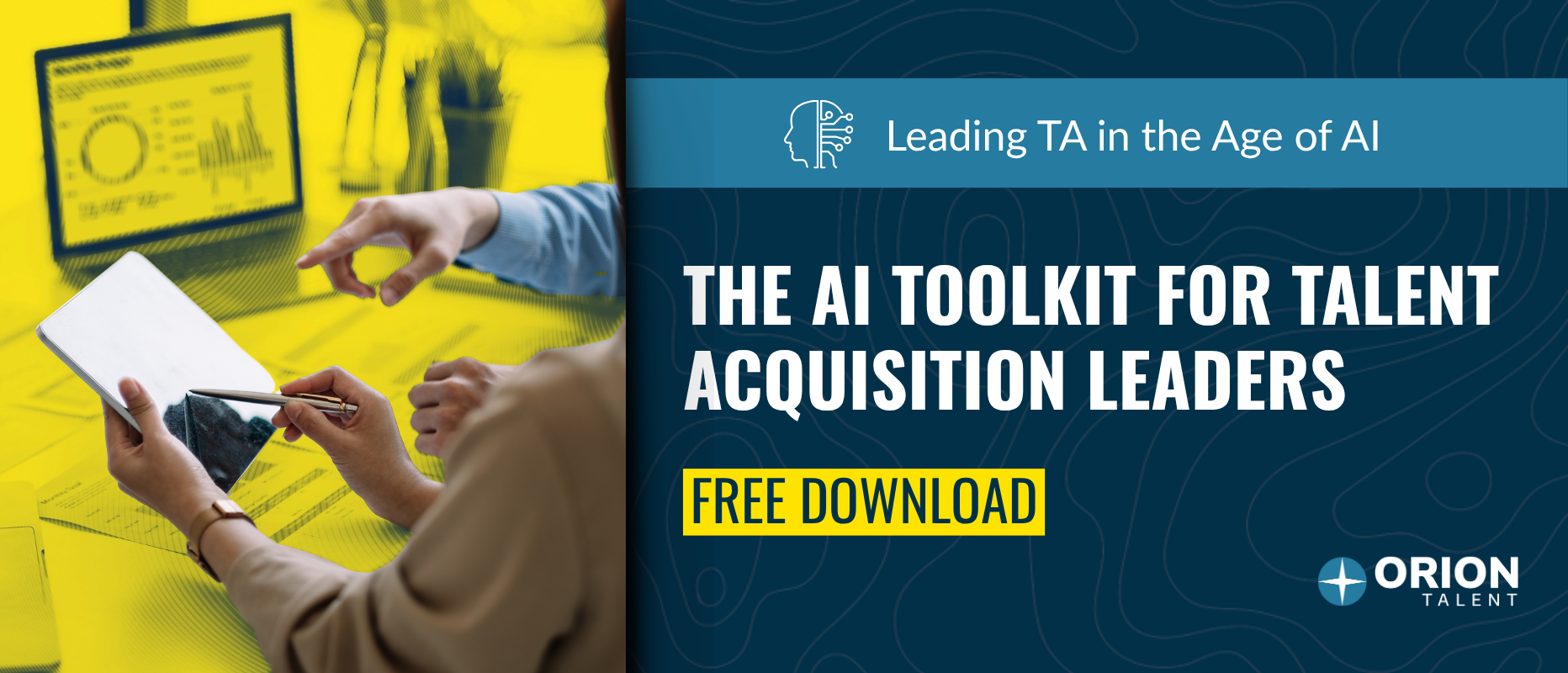
Artificial intelligence is changing how talent acquisition teams work. Used well, AI can strengthen recruiter capability, improve decisions, expand access to talent, and create better experiences.
Yet many organizations still face the same practical question: Where to begin?
AI capabilities are evolving quickly, and new tools continue to enter the market. Talent acquisition leaders need a clear way to assess their current foundation, select meaningful opportunities, evaluate technology, and move forward responsibly.
The AI Toolkit for Talent Acquisition Leaders provides that starting point. It brings together six practical tools designed to help TA teams build a responsible, business-aligned AI strategy and turn it into action.
-
Assess Your AI Readiness
Before expanding AI, TA leaders need an honest view of the organization’s ability to support it. The Recruiter AI Readiness Assessment will help evaluate five dimensions: people and skills, process and workflow, technology and data, governance and trust, and leadership and measurement. Teams rate specific statements within each area to identify strengths, gaps, and the issues that require attention before moving into higher-impact applications.
The assessment helps leaders identify the gaps creating the greatest barrier or risk and select two priorities for action.
-
Establish Responsible Guardrails
The AI Governance Checklist helps teams translate responsible AI principles into clear operating requirements. It addresses accountability, human oversight, fairness, candidate trust, privacy, security, validation, and ongoing monitoring.
Each requirement includes space to record whether it is complete, in progress, or not started, along with an accountable owner. This structure helps cross-functional teams move from general agreement about responsible AI to specific decisions and responsibilities.
-
Prioritize the Right Use Cases
The Recruiting AI Use Case Matrix helps leaders explore opportunities across the recruiting lifecycle, including workforce planning, role definition, talent discovery, candidate engagement, evaluation, recruiter enablement, and process optimization.
Teams begin by defining the business problem, primary user, and desired outcome for each potential use case. They then score the options based on business value, user value, feasibility, readiness, and risk.
The result is a more disciplined way to select a pilot. Instead of choosing the newest technology, leaders can focus on a problem that matters enough to demonstrate value, is contained enough to support learning, and is feasible enough to launch.
-
Compare AI Vendors With Greater Confidence
Product demonstrations can make every solution look promising. The AI Vendor Evaluation Scorecard helps teams compare vendors based on evidence and organizational fit.
The weighted scorecard covers business fit, user experience, data and integration, AI performance, governance and security, and overall value. It also includes vendor questions, red flags, and a decision record.
This allows leaders to evaluate more than features. They can examine whether the technology fits their workflow, supports human review, provides appropriate transparency, and produces evidence for its performance claims.
-
Build a Business-Aligned AI Strategy
The AI Strategy Canvas brings the major decisions together in a one-page roadmap. It guides leaders through business priorities, problems worth solving, priority use cases, recruiter capability, workflow changes, technology and data needs, governance, measures of success, and ownership.
The canvas concludes with a strategy statement defining the desired outcomes, supported users or workflows, essential human contribution, and measures of success.
-
Turn the Strategy Into a 90-Day Plan
The final tool helps teams move from planning to execution. The 90-Day Action Plan divides the work into three phases: align and prepare, pilot and learn, and evaluate and decide.
Teams can assign actions, owners, due dates, success measures, and status. At the end of the 90 days, leaders review the evidence and choose whether to scale, revise, extend, pause, or stop the pilot.
This approach creates forward movement without requiring the organization to predict every development in AI or commit to a large transformation before it has learned what works.
Lead AI With Intention
Use the AI toolkit individually or with a cross-functional group. Start with what is true today, identify the decisions that matter most, and assign clear ownership for the next step.
After completing your internal evaluation, if you would like to talk through the gaps you identified or explore your next steps, please contact Orion Talent to start the conversation.
Archives
- October 2026
- September 2026
- August 2026
- July 2026
- June 2026
- May 2026
- April 2026
- March 2026
- February 2026
- January 2026
- December 2025
- November 2025
- October 2025
- September 2025
- August 2025
- July 2025
- June 2025
- May 2025
- April 2025
- March 2025
- February 2025
- October 2024
- May 2024
- March 2024
- February 2024
- January 2024
- December 2023
- November 2023
- October 2023
- September 2023
- August 2023
- July 2023
- June 2023
- May 2023
- April 2023
- March 2023
- February 2023
- January 2023
 RSS Feed