Written by Laura Schmiegel, SVP, Strategic Partnerships
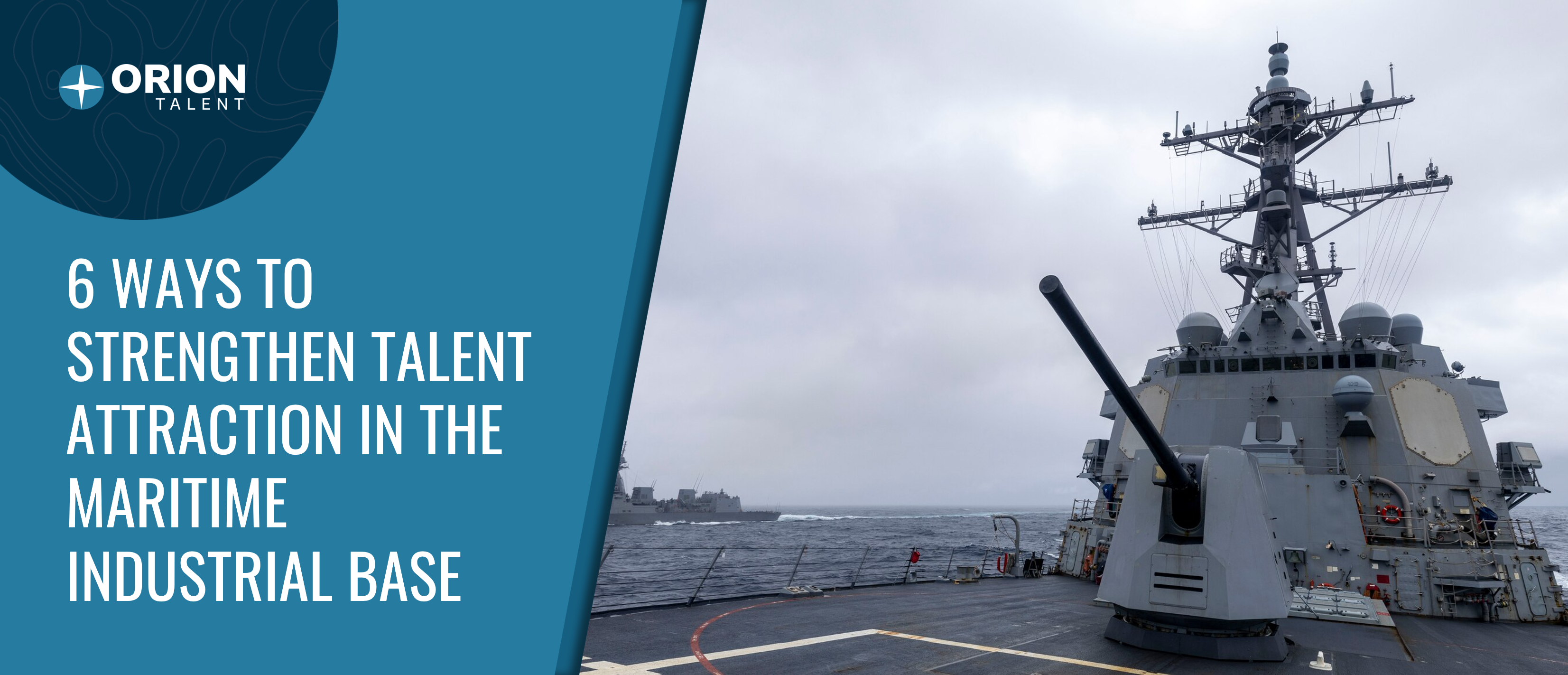
At Sea-Air-Space 2026, conversations about shipbuilding capacity, supplier readiness, and national defense priorities consistently returned to one underlying issue: workforce.
The challenge, however, is not simply one of hiring volume. It is a question of how the maritime industrial base builds a workforce that can respond to uncertainty, scale with demand, and sustain production over time.
Across sessions and discussions, several themes emerged that point to a broader shift in how employers may need to think about talent strategy.
Workforce Constraints Are Being Driven by Uncertainty
Employers described a familiar set of challenges: a shortage of experienced talent, ongoing retention issues, and difficulty planning due to contract timing.
While each of these factors affects hiring, uncertainty around contracts and acquisition timing stood out as the most significant constraint on capacity. Without a clear and stable demand signal, employers are limited in their ability to hire proactively or invest confidently in their workforce.
This dynamic reinforces a broader reality. Workforce strategy in the maritime industrial base is closely tied to visibility into future work. When that visibility is limited, hiring becomes reactive, and production timelines are more difficult to maintain.
Talent Strategy Needs to Extend Beyond Hiring Cycles
For many organizations in the supply chain, hiring demand fluctuates with contract activity. Periods of rapid hiring are often followed by pauses or slowdowns when work is delayed or uncertain.
This pattern creates inefficiencies and can extend the time it takes to reach full production capacity.
What emerged from the event was a need for a more continuous approach to talent. Rather than aligning recruiting efforts strictly to contract cycles, employers may benefit from maintaining access to talent pools that allow them to respond more quickly when demand increases.
An “always-on” approach to talent does not eliminate uncertainty, but it can help reduce its impact on hiring timelines and operational readiness.
Pipeline Growth Must Be Paired with Workforce Development
There has been meaningful progress in expanding talent pipelines across the maritime ecosystem, including increased investment in training programs and new entry points into the industry.
At the same time, employers noted that many candidates still require additional development after they are hired.
This highlights an important consideration. Building a pipeline is only part of the solution. Employers that want to fully leverage new talent sources may also need to invest in structured onboarding, training, and skill development to help those individuals reach productivity more quickly.
In practice, this means viewing workforce development as an extension of recruiting, rather than a separate initiative.
Balancing Immediate Needs with Long-Term Workforce Goals
The discussions at Sea-Air-Space also reflected a tension that many employers are navigating today.
On one hand, there is a clear need to build the next generation of talent to support long-term growth. On the other, there is an immediate need for experienced individuals who can contribute from day one.
These priorities are not mutually exclusive. Instead, they point to the need for a balanced workforce strategy that includes both experienced talent and emerging talent.
Organizations that are able to integrate both approaches may be better positioned to maintain continuity in the short term while also building toward future workforce needs.
Retention Is Closely Tied to Workforce Design
Retention was consistently cited as a factor affecting production speed and overall workforce stability.
What stood out in these conversations was the emphasis on how employees are supported once they join an organization. Employers pointed to the importance of clear career paths, mentorship, and programs that help new hires acclimate and grow within the business.
These elements are particularly relevant for talent populations such as veterans, who often value structure, progression, and a strong team environment.
As a result, retention may be less about isolated initiatives and more about how the overall workforce experience is designed and delivered.
Translating Strategy into Outcomes
While many of the challenges discussed at Sea-Air-Space are systemic, there were also tangible examples of progress.
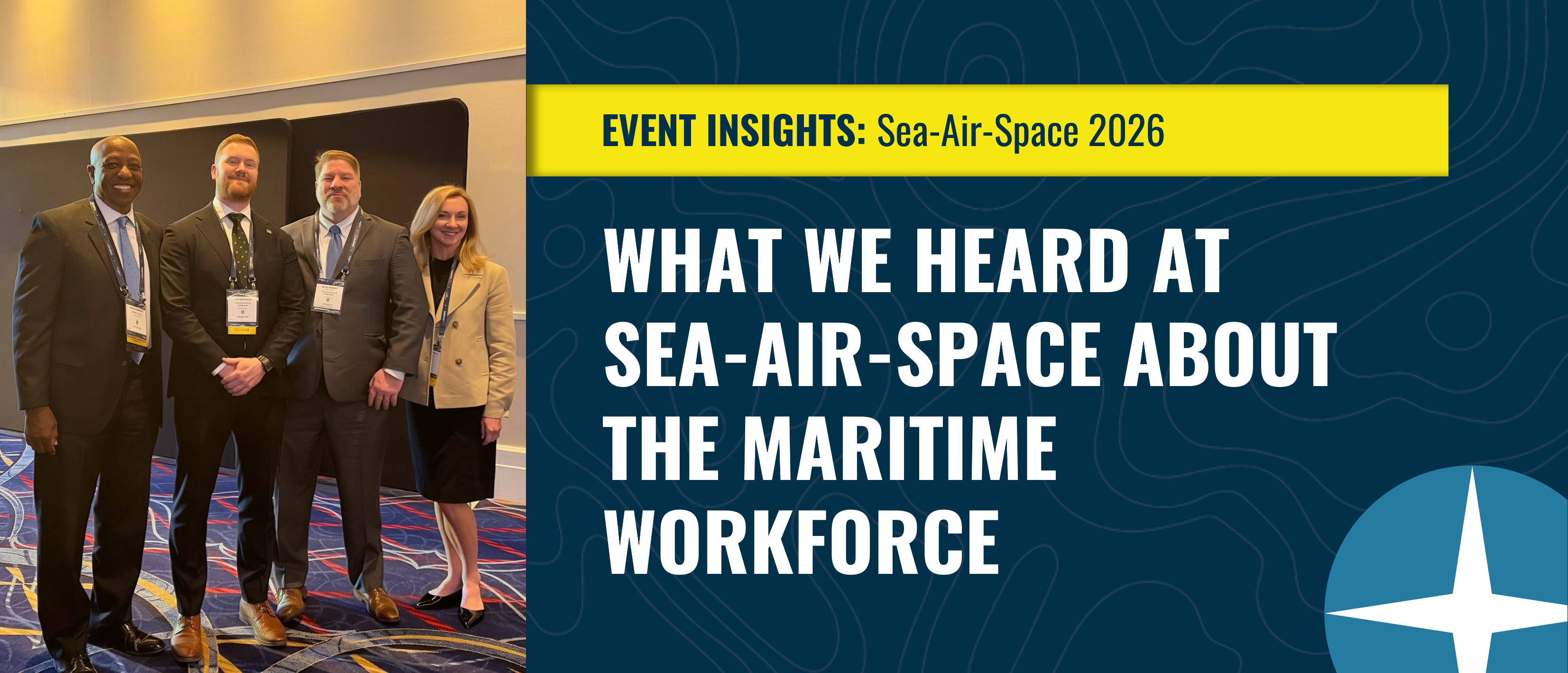
During a visit with the Entwistle team, we met a successful hire through Orion Talent as part of the MIB Supplier Recruiting program. The company’s leadership described the individual as a strategically important hire and emphasized both his dependability and alignment with the role.
Moments like this provide a practical illustration of what effective workforce strategy can look like when it is aligned to real demand and supported by the right approach to sourcing and development.
Looking Ahead
The conversations at Sea-Air-Space suggest that the maritime industrial base is at an inflection point in how it approaches workforce strategy.
Hiring remains a critical component, but it is no longer sufficient on its own. Employers are being challenged to think more holistically about how they attract, develop, and retain talent in an environment defined by both opportunity and uncertainty.
Those that take a more integrated approach may be better positioned not only to meet current demand, but to build the workforce needed for the future.
For maritime industrial base suppliers navigating these challenges, the right workforce strategy can help reduce hiring delays, strengthen retention, and improve readiness for future demand.
Learn more about how Orion Talent supports submarine and shipbuilding suppliers.
Archives
- September 2026
- August 2026
- July 2026
- June 2026
- May 2026
- April 2026
- March 2026
- February 2026
- January 2026
- December 2025
- November 2025
- October 2025
- September 2025
- August 2025
- July 2025
- June 2025
- May 2025
- April 2025
- March 2025
- February 2025
- October 2024
- May 2024
- March 2024
- February 2024
- January 2024
- December 2023
- November 2023
- October 2023
- September 2023
- August 2023
- July 2023
- June 2023
- May 2023
- April 2023
- March 2023
- February 2023
- January 2023
 RSS Feed