Business professionals, investors, and entrepreneurs have been turning to Forbes Magazine for advice and business-related news for over 100 years. Orion Talent CEO Sarah Peiker was invited to contribute to the Forbes Human Resources Council, an invitation-only organization for senior-level executives, and has published numerous thought leadership pieces since joining Orion Talent in Fall 2021. Here’s a sneak peek into what Sarah says in three of her most recent articles:
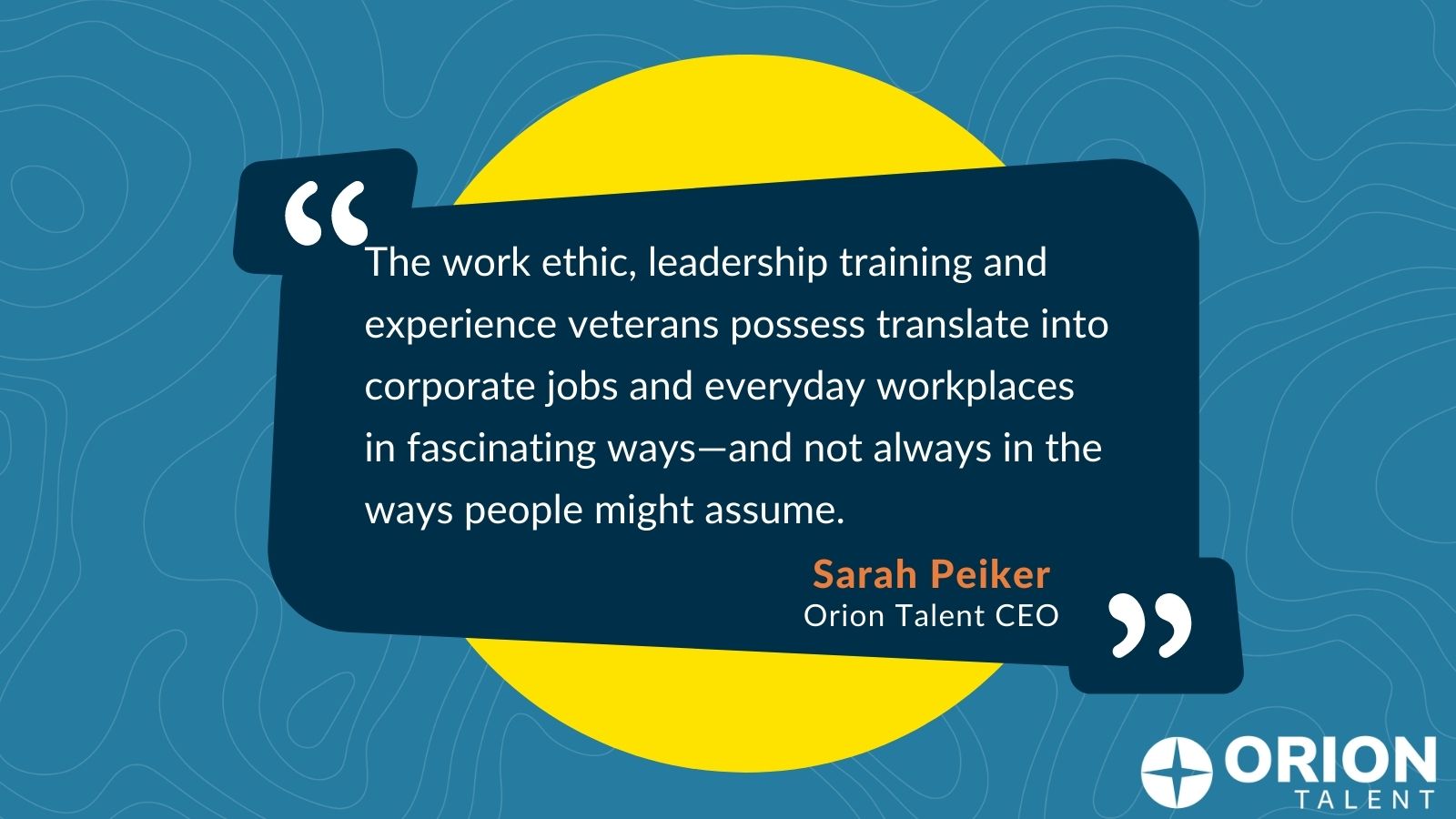
Five Assets Military Veterans Bring to the Business Leadership Team
More than 200,000 service members transition out of the military each year. This is a sizeable, highly trained talent pool rich with leadership experience. In this article, Sarah discusses some ways in which veterans demonstrate the skills and leadership abilities necessary to thrive in management roles:
Devotion to learning and training
Constant, rigorous training is part of the military experience, and leaders who believe in continuous training build workforces that adapt and evolve.
Purpose-driven leadership
The vision and dedication military veterans bring to an organization are an asset when it comes to helping employees feel like they’re a part of the big picture.
High tolerance for big stress
Serious responsibilities and stress are part of daily life in the military. This is an asset for any leader!
Customer and employee understanding
Military leaders are disciplined in the Military Decision-Making Process (MDMP), an iterative process that accesses and analyzes a changing operational environment. Applied to the business world, this process helps leaders harness diligence, logic, close observation, and sound judgment to strategically solve problems.
Flexibility
Adaptation, flexibility, and excellent project management skills are required to succeed in the military, and these same skills will allow leaders to adapt and deliver as needed in a business environment.
Why and How to Evolve from Human Resources to People & Culture
Orion Talent’s human resources team made the strategic decision to drop “HR” from its name and become “People and Culture” instead. In this article, Sarah discusses why this matters and the impact it played in Orion’s overall direction. She touches on why HR needs to elevate, the risks of a transactional, disconnected HR department, and tips for transforming into a people and culture organization. Here are a few steps to help you get started:
Develop connections across the business
People Partners, members of the people and culture team assigned to specific business units, are responsible for supporting the leaders and team members they’re assigned to and for gaining an understanding of the business goals that drive each unit and team member. Rather than employees and leaders reaching out to HR for information, team members build partnerships and look for opportunities to make an impact.
Welcome and gather data
Use workforce data (surveys, focus groups, town halls, individual listening sessions, etc) to fine-tune programs and tools as well as provide strategic guidance to managers and leaders within the organization.
Refine and safeguard the EVP
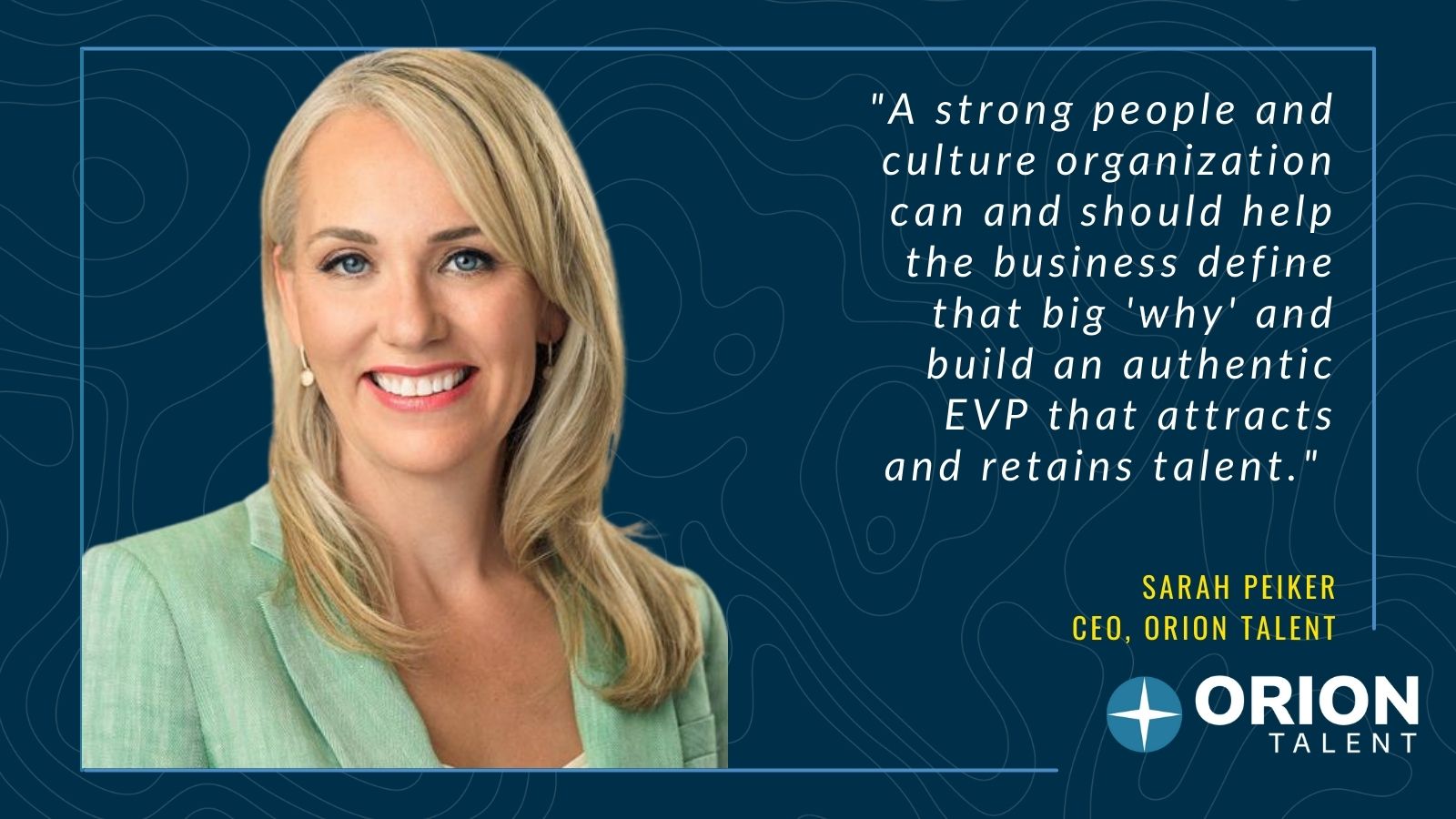
Employees are more purpose-driven than at any point in history, so it’s vital that organizations define why people should work for them and build an authentic EVP that attracts and retains talent.
Play a key role in onboarding
Onboarding helps reinforce cultural values from Day 1 and is critical for talent retention.
How Workforce Agility Can Help Retention- Even in a Recession
Economic declines can take a toll on the workforce, whether they’re recessionary or not. In this article, Sarah discusses how workforce agility is key for business leaders and employers eager to maintain performance, quality, and customer engagement despite marketplace change. She proposes three ways to build a more agile workplace:
Encourage role flexibility
Encourage employees to think about their jobs in multifaceted ways where they are receptive to forging new paths as markets change and opportunities arise instead of defaulting to linear career paths defined by preexisting organizational roles.
Make agile leadership a principle
Encourage your managers and directors to demonstrate flexibility in their actions and guidance. Give them the space, tools, and budget to help employees grow.
Hire with retention intention
Businesses that hire with purpose have better retention; employees who see and feel purpose on the job are more loyal and flexible in how they work.
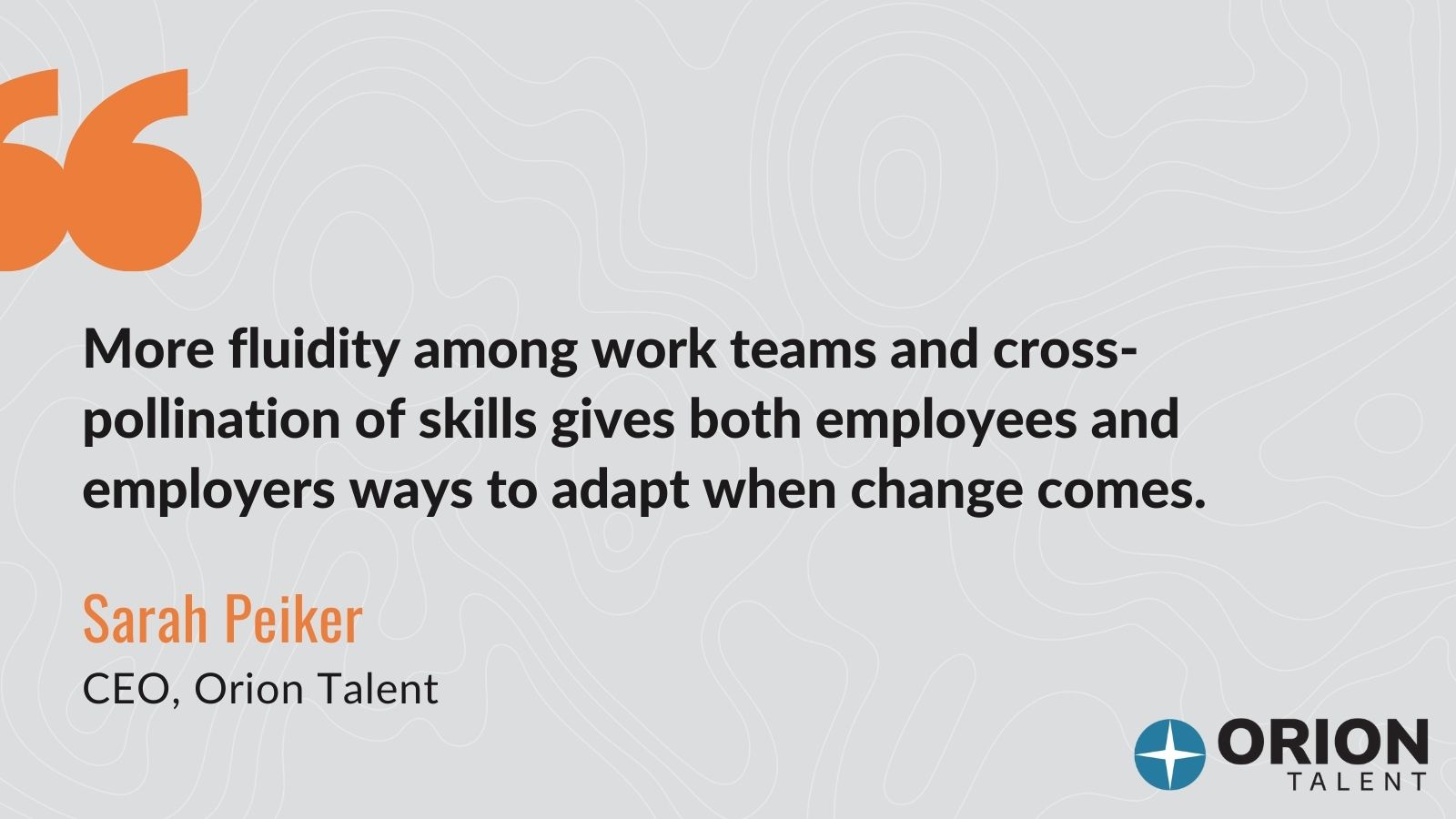 Sarah Says: Words of Wisdom
You can read all of Sarah’s Forbes Council articles here. Stay tuned for future articles in the coming months, as Sarah’s advice is always insightful and worth a read. Look out for Part II of Sarah Says later this summer.
Archives
- October 2026
- September 2026
- August 2026
- July 2026
- June 2026
- May 2026
- April 2026
- March 2026
- February 2026
- January 2026
- December 2025
- November 2025
- October 2025
- September 2025
- August 2025
- July 2025
- June 2025
- May 2025
- April 2025
- March 2025
- February 2025
- October 2024
- May 2024
- March 2024
- February 2024
- January 2024
- December 2023
- November 2023
- October 2023
- September 2023
- August 2023
- July 2023
- June 2023
- May 2023
- April 2023
- March 2023
- February 2023
- January 2023
 RSS Feed